


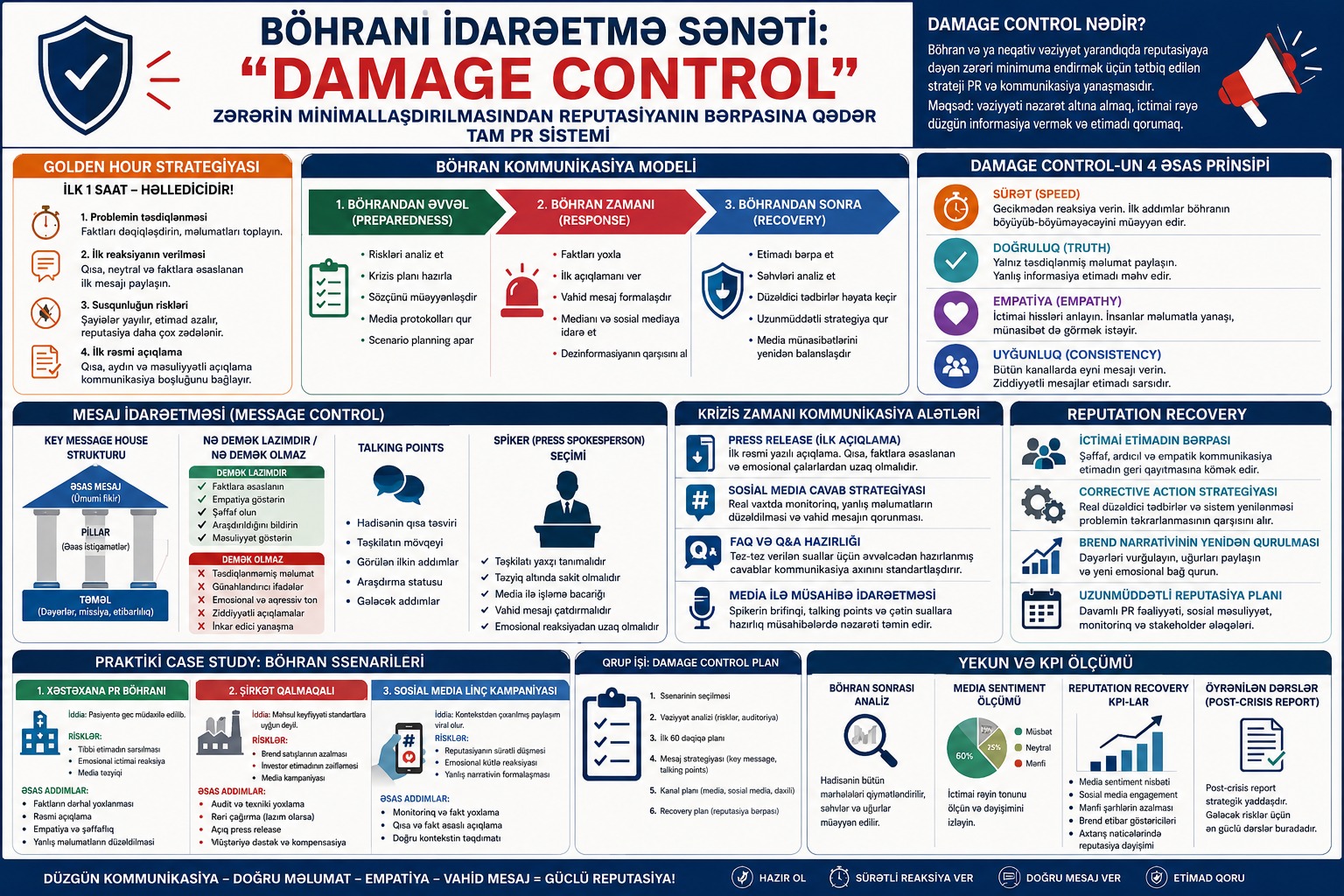
The Art of Crisis Management: “Damage Control” — from minimizing harm to restoring reputation as a complete PR system
.jpg)
What is Damage Control — Managing Reputational Harm?
Damage control is a strategic approach in PR and communications applied in situations of crisis or negative events with the aim of minimizing damage to reputation. This approach is designed to take control of the situation, provide the public with accurate information, and preserve trust.
Damage control is usually activated in unexpected situations such as the spread of false information, scandals, wrong decisions, service failures, or negative social media campaigns. In such cases, the main objective is to prevent panic and ensure fast, fact-based communication.
An effective damage control strategy includes three key elements: rapid response, accurate information, and a unified message. If an organization responds late or provides contradictory information, trust is significantly undermined.
Damage control is one of the most important communication strategies in crisis PR, aimed at protecting reputation and minimizing harm. Its core idea is not to hide the problem, but to manage it properly and maintain public trust.
The key element is speed and accuracy of response. During a crisis, the information vacuum is quickly filled with rumors and misinformation. Therefore, PR professionals first collect facts, analyze the situation, and only then prepare a balanced message.
Another important aspect is honesty and transparency. In today’s media environment, hiding or distorting information is quickly exposed, which further worsens the situation. Empathy also plays a crucial role: messages must address not only facts but also people’s emotions.
Communication consistency is essential. Inconsistent messaging across different channels can damage trust, which is why a unified communication strategy is applied.
After the crisis is resolved, the work does not end — the reputation recovery phase begins. Organizations analyze the situation, learn lessons, and develop new communication strategies to prevent similar cases in the future.
Overall, damage control is the art of managing public trust. When applied correctly, even severe crises can be turned into manageable situations without long-term reputational damage.
The “Golden Hour” Strategy — The Importance of the First Hour in Crisis Communication
The “Golden Hour” is a critical period in crisis communication, referring to the first 60 minutes after a crisis occurs. This time frame largely determines the future image of an organization.
Confirming the Problem
The first step is verifying the accuracy of the information. It is important not to react emotionally, but to rely on facts. Internal responsible teams assess the situation and gather initial data. This must be done quickly to avoid an information vacuum.
Initial Response
A full explanation is not required at this stage, but the organization must demonstrate awareness of the situation. The message is usually short, neutral, and factual: the company states that it is monitoring the situation, conducting an investigation, and will provide further updates later.
Risks of Silence
Silence during a crisis is one of the most serious communication mistakes. In the absence of information, the public turns to alternative sources, which increases rumors and reduces trust.
Preparing the First Official Statement
During the “Golden Hour,” the first official statement is prepared. It may be brief but should include: confirmation that the incident has been identified and is under investigation, a message that the situation is under control, a restrained and neutral tone, and a promise of further updates. The main goal is not to solve the entire problem, but to close the communication gap and maintain trust.
The “Golden Hour” demonstrates that time is the most critical resource in crisis communication. Proper actions within the first hour can significantly reduce the impact of a crisis.
Crisis Reality and the Role of Communication
Crises are inevitable for every organization. However, reputation is determined not by the crisis itself, but by how it is managed. Professional communication and timely actions can turn a crisis into an opportunity to rebuild trust.
Case Study from Global Practice: Tylenol Crisis
One of the most well-known examples of damage control is the 1982 crisis involving Johnson & Johnson and its Tylenol product.
Several people in the United States died after taking Tylenol capsules. It was later discovered that the capsules had been laced with cyanide. This caused nationwide panic and posed a serious reputational risk for the company.
Company Actions:
- immediate public communication
- suspension of product sales
- recall of approximately 31 million bottles
- transparent communication with the media
- prioritizing human safety over profit
- development of a new, safer packaging system
Thanks to its open and rapid response, the company managed to restore public trust despite short-term reputational losses.
This case established a key PR principle:
“In a crisis, people evaluate not only what happened, but also how the organization responds to it.”
PR Specialist of the Central Customs Hospital
Dilyara Zamanova
Bütün xəbərlər Facebook səhifəmizdə




.jpg)
.jpg)








.jpg)

.png)

 USD
USD
 EUR
EUR
 GBP
GBP
 RUB
RUB