


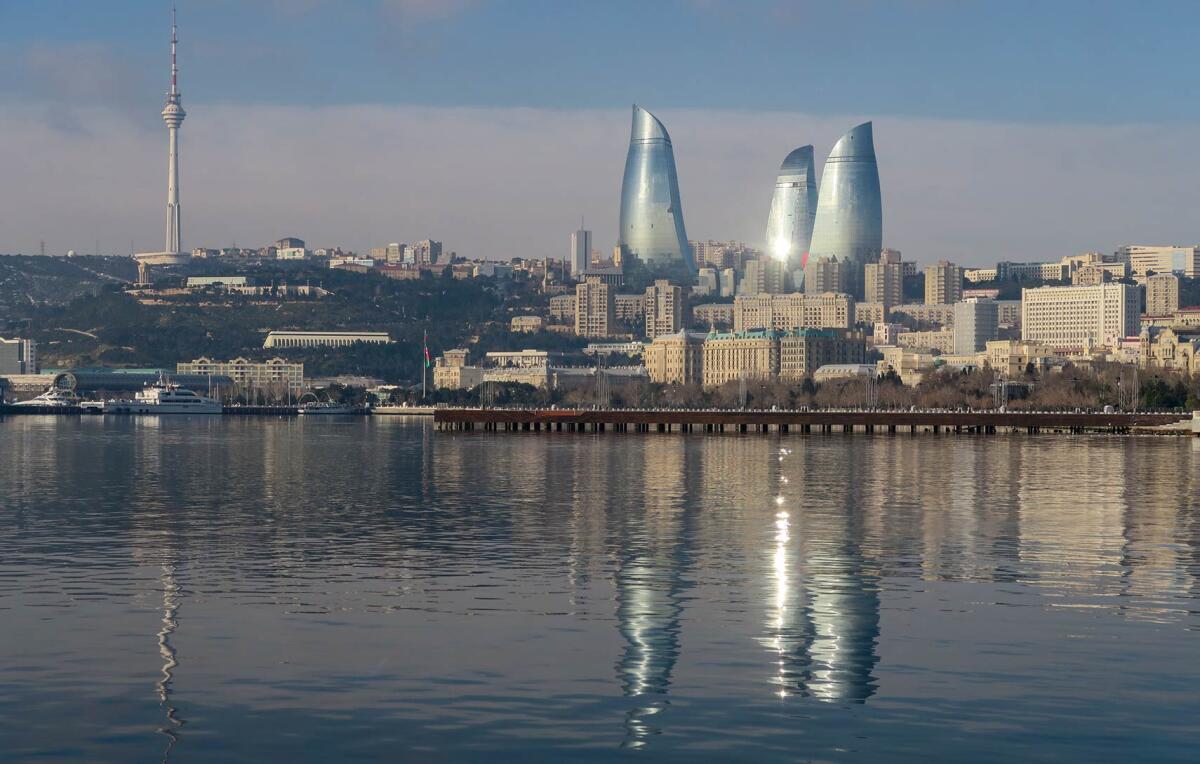
Azerbaijan is a strategic gateway, providing access to broader markets for Central Asian resources, reads an article in The Times of Central Asia, SİA informs.
"Against the backdrop of growing global fragmentation and the weakening of universal international institutions, the role of so-called middle powers is increasing. These are states able to influence regional agendas without possessing great-power status. In this changing system, Central Asia is gradually moving beyond its long-standing image as a geopolitical periphery and is beginning to act more like a region with shared interests.
For decades, the region was viewed mainly as a space where the interests of external powers, including Russia, China, the US, and others, intersected. Today, that paradigm is beginning to shift. Central Asia is showing greater signs of agency through what may be described as a cluster effect: individually, the countries have limited influence, but collectively they form an important transit hub between Europe and Asia, a growing market, a significant resource base, and a strategic security zone. This creates the conditions for a more coordinated regional position, even if a single regional voice is still emerging rather than fully formed," reads the article.
"The institutional foundation of this process is the Central Asian leaders' consultative format, which is now expanding through Azerbaijan"s participation. That is turning what was once a C5 dialogue into a looser C5+Azerbaijan, or C6, framework focused on transport, energy, and practical cooperation.
Within this framework, the countries of the region are learning to act in a more coordinated manner without supranational pressure. In practice, this process is developing through three main areas.
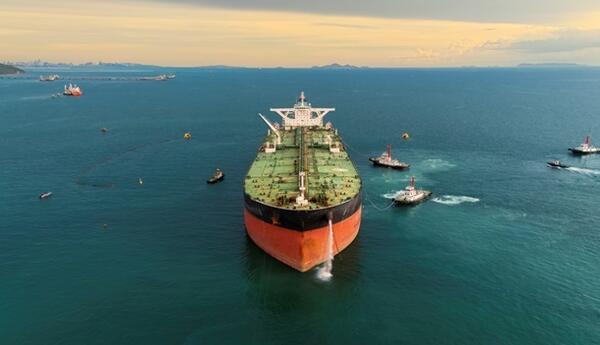
The first is transport and logistics. Azerbaijan's participation has strengthened efforts to make the Middle Corridor more coherent, though the route still faces bottlenecks in capacity, customs coordination, and Caspian crossings. Through tariff coordination, simplified border procedures, and investment in port and rail infrastructure, Central Asia and the Caucasus are increasingly functioning as parts of a single transport artery. That gives the region a faster option for cargo between China and Europe, even if it remains far smaller than traditional maritime routes.
Shipping goods via the Suez Canal or the northern route can take between 35 and 45 days, whereas the Middle Corridor can reduce transit times to around 13-21 days under favorable conditions. According to forecasts cited by BCG, shipping volumes along the route could increase three- to fourfold during the current decade," the author wrote.
"Beyond logistics, the project is creating a new economic framework for the region. Its status as a crossroads is attracting investment in transport hubs and manufacturing facilities along the route, with the potential to turn transit corridors into zones of economic growth. This gives participating countries not only transit revenue but a stronger basis for long-term strategic resilience.
Azerbaijan, in turn, serves as a strategic gateway, providing Central Asian resources with access to wider markets. Agreements on laying a deep-sea cable across the Caspian Sea and integrating regional power grids could support future exports of renewable electricity from Kazakhstan and Uzbekistan toward European markets, with green hydrogen sometimes discussed as a longer-term possibility. As a result, a broader energy hub is gradually taking shape, linking the Caspian region with the European Union through existing and planned infrastructure," reads the article.
"The third key factor is the transformation of the region into a larger investment destination. The C5+Azerbaijan format brings together a market of around 94 million consumers and a combined GDP exceeding $650 billion, based on recent international GDP estimates. For international investors, the region is gradually presenting itself as a more coherent economic space with a growing capacity to coordinate priorities in negotiations with major global actors.
Further harmonization of customs rules, tariffs, digital documentation, and investment procedures could reduce risks for investors. Coordinated policies could also help regional states attract investment for large-scale projects ranging from manufacturing to petrochemicals and transport infrastructure. Azerbaijan's integration into this process gives Central Asia more direct access to financial instruments and investment hubs in the Caspian region and Europe, creating a broader synergy effect.
Ultimately, such consolidation could contribute to long-term strategic stability. A more coordinated investment space would help shield the region from external pressure and the volatility of individual markets. It could also encourage technology transfers and the creation of higher-skilled jobs, positioning the C5+Azerbaijan framework as one of the more dynamic emerging centers of economic influence in Eurasia," the author wrote.

Bütün xəbərlər Facebook səhifəmizdə


.png)


.png)










 USD
USD
 EUR
EUR
 GBP
GBP RUB
RUB