


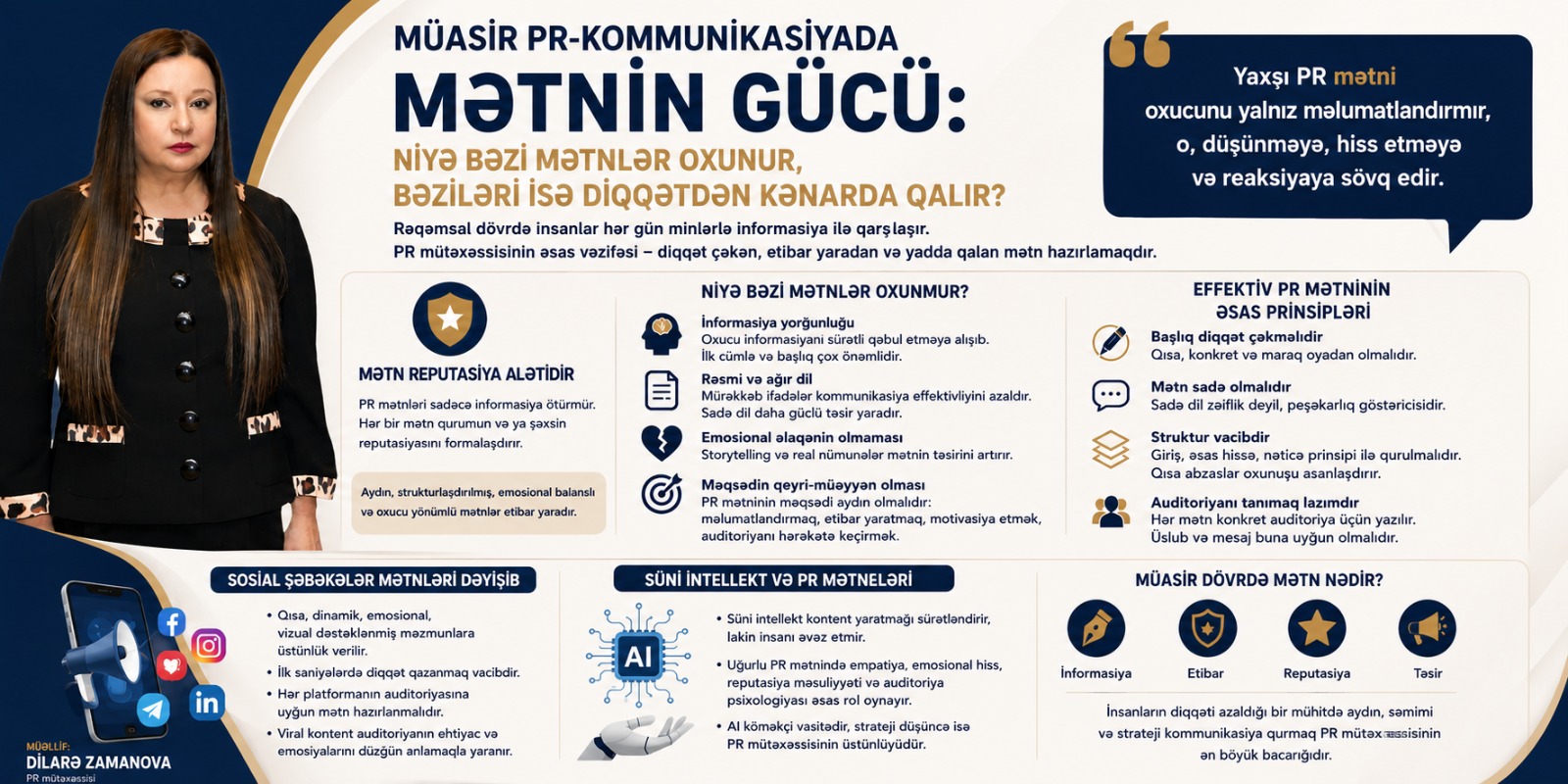
In the era of digital communication, people are exposed to thousands of pieces of information every day. Social networks, news portals, messengers, corporate platforms, and media resources accelerate the flow of information. In such an environment, the main task of a PR specialist is not simply to share information, but to create texts that attract audience attention, build trust, and remain memorable. Today, communication is increasingly carried out in written form. People prefer messaging and clear texts over phone conversations. This shift has further strengthened the role of text in the PR field. A well-structured communication text has now become one of the key elements of a successful PR strategy.
Text as a Reputation Tool
PR texts do not simply convey information. Every text shapes the reputation of an organization or an individual. The words used, sentence structure, tone, and style create a specific emotional impact on the audience.
Readers often form their first impression through text. Professionally prepared press releases, expert articles, or social media posts can build audience trust. Therefore, PR texts should not only be informative, but also clear, structured, emotionally balanced, and reader-oriented.
Why Are Some Texts Not Read?
One of the most common problems in PR is that audiences do not read texts completely. There are several main reasons for this.
Information Fatigue
Modern audiences do not want to spend time on complicated texts. Readers are used to consuming information quickly. Therefore, the first sentence and the headline are extremely important.
Overly Formal and Heavy Language
Many PR texts use excessively formal and complicated expressions. However, effective communication should be built on simplicity. Audiences respond better to texts written in clear and accessible language.
Lack of Emotional Connection
Readers seek not only information but also emotional connection. Dry facts often fail to hold attention. Storytelling elements, real-life examples, and emotional touches increase the impact of a text.
Unclear Purpose
In some texts, the main message is not clear. A PR text must have a specific goal: informing, building trust, motivating, or encouraging the audience to take action.
Key Principles of Effective PR Texts
Several important principles should be considered when creating successful PR texts.
Headlines Must Capture Attention
The headline determines whether the reader will open the text or not. Strong headlines should be short, clear, and engaging.
The Text Must Be Simple
Simple language is not a weakness; it is a sign of professionalism. Complex terminology and long sentences should be minimized.
Structure Matters
A text should follow the structure of introduction, main body, and conclusion. Short paragraphs make reading easier.
Know Your Audience
Every text is written for a specific audience. A social media post aimed at young people cannot have the same style as an official press release prepared for a government institution.
Social Media Has Changed PR Texts
Social media has introduced new approaches to PR communication. Audiences now prefer dynamic, emotional, and visually supported content.
It is important to capture attention within the first seconds on these platforms. Texts prepared for Facebook, Instagram, LinkedIn, Telegram, and the MAX platform should be adapted to the audience, communication style, and user behavior of each platform. In the digital environment, publishing the same text across all platforms is no longer considered effective. Each platform requires its own presentation style, visual dynamics, and understanding of audience expectations.
Artificial Intelligence and PR Texts
Recently, artificial intelligence tools have been actively used in the PR field. Platforms such as ChatGPT accelerate content creation. However, AI cannot completely replace human creativity. Successful PR texts rely heavily on empathy, emotional understanding, reputation responsibility, and audience psychology.
Artificial intelligence is a supportive tool, but strategic thinking and communication skills remain the main advantages of PR specialists.Text is not just information — it is a tool of reputation, trust, and influence. In an environment where people’s attention spans are decreasing, PR specialists must communicate more clearly, sincerely, and strategically. A good PR text does not only inform the reader. It encourages people to think, feel, and react. That is the true purpose of communication.
What Is PR Copywriting?
PR copywriting is the creation of professional communication texts aimed at building a positive public opinion about a company, organization, brand, or individual. This includes press releases, speeches, interviews, social media posts, corporate news, event announcements, official statements, and reputation-oriented content. The main goal of PR copywriting is not direct sales, but building trust, informing audiences, and shaping a long-term reputation.
Main Principles of PR Copywriting
1. Accuracy and Reliability
Information presented in PR texts must be verified and trustworthy. False or exaggerated information can seriously damage a brand’s reputation.
2. Audience Orientation
A text should be built not only from the writer’s perspective but also according to the interests of the audience. Age, interests, social status, and information needs of the audience should all be considered.
3. Simple and Clear Language
Professional PR texts are written in accessible and fluent language rather than complicated terminology. The goal is to inform the audience, not confuse them.
4. Creating Emotional Connection
Strong PR texts create emotional responses such as trust, motivation, interest, or empathy.
5. Strategic Consistency
Every PR text should be part of an overall communication strategy. It should align with the brand’s mission, values, and corporate position.
What Is the Difference Between Advertising Texts and PR Texts?
PR texts are often confused with advertising texts. However, the goals and approaches of these two communication forms are different. The purpose of advertising texts is to sell a product or service. They focus on direct sales and short-term results, often using calls to action such as “Buy,” “Choose,” or “Try.” The purpose of PR texts is to build reputation and trust. Facts and credibility are prioritized, long-term public relationships are established, and a more neutral and professional tone is preferred.
Functions of PR Texts
PR texts perform various communication functions:
Informing the public
Strengthening a company’s reputation
Building communication during crises
Developing media relations
Creating positive public opinion about a brand
Increasing social trust
Demonstrating corporate transparency
For example, news about a successful surgery in a medical institution is not only medical information but also a PR text demonstrating the professionalism and reliability of the hospital.
Audience-Oriented Text Structure
One of the main characteristics of effective PR texts is their adaptation to the audience. Different platforms and audiences require different presentation styles.
For Facebook, more emotional and socially oriented texts, human stories, visual emphasis, and attention-grabbing headlines are effective.
For Instagram, short and dynamic texts, emotionally engaging expressions, and strong opening sentences work best.
For LinkedIn, a formal and professional tone, statistics, expert approaches, and corporate image are essential.
For Telegram and the MAX platform, operational and informative styles, short but clear messages, and structures suitable for quick reading are important.
Therefore, the same information should not be shared in the same format across all platforms.
Every organization should have its own communication language and presentation style. This is an important part of corporate identity. Brand language includes consistent style, unified terminology and expressions, professional tone, and harmony between visuals and text.
Comparing Weak and Strong PR Texts
The success of a PR text depends on several factors: headline, structure, language, emotional impact, and audience relevance.
Characteristics of Weak PR Texts
Long and confusing sentences
Uninteresting introductions
Weak headlines
Excessively formal and “cold” language
Information that provides no value to the reader
Weak visual and emotional appeal
Presentation unsuitable for the platform
Such texts usually fail to generate audience interest and reduce communication effectiveness.
Characteristics of Strong PR Texts
Attention-grabbing and informative headlines
Strong opening sentences
Simple and fluent language
Emotional and human-centered approach
Structured presentation
Content aligned with audience interests
Platform-appropriate communication style
Strong PR texts create both interest and trust among readers. They are shared more often, remembered longer, and strengthen brand reputation.
Why Is the Headline Considered the Most Important Part?
The first thing readers notice in a PR text is the headline. Statistically, most people only read headlines. If the headline does not spark interest, the rest of the text will not be read.
What Makes a Successful Headline?
It should be short and clear
It should create curiosity
It should present information without hiding the essence
It should create emotional or informational impact
PR copywriting is one of the most important elements of modern communication strategy. A strong PR text does not only provide information but also builds reputation, creates emotional connections with audiences, and shapes the public image of a brand. In the digital era, well-written PR texts have become one of the main pillars of public reputation for companies and organizations.
Dilara Zamanova
PR Specialist at the Central Customs Hospital
Bütün xəbərlər Facebook səhifəmizdə









.jpg)
.jpg)









.jpg)

.png)

 USD
USD
 EUR
EUR
 GBP
GBP
 RUB
RUB