


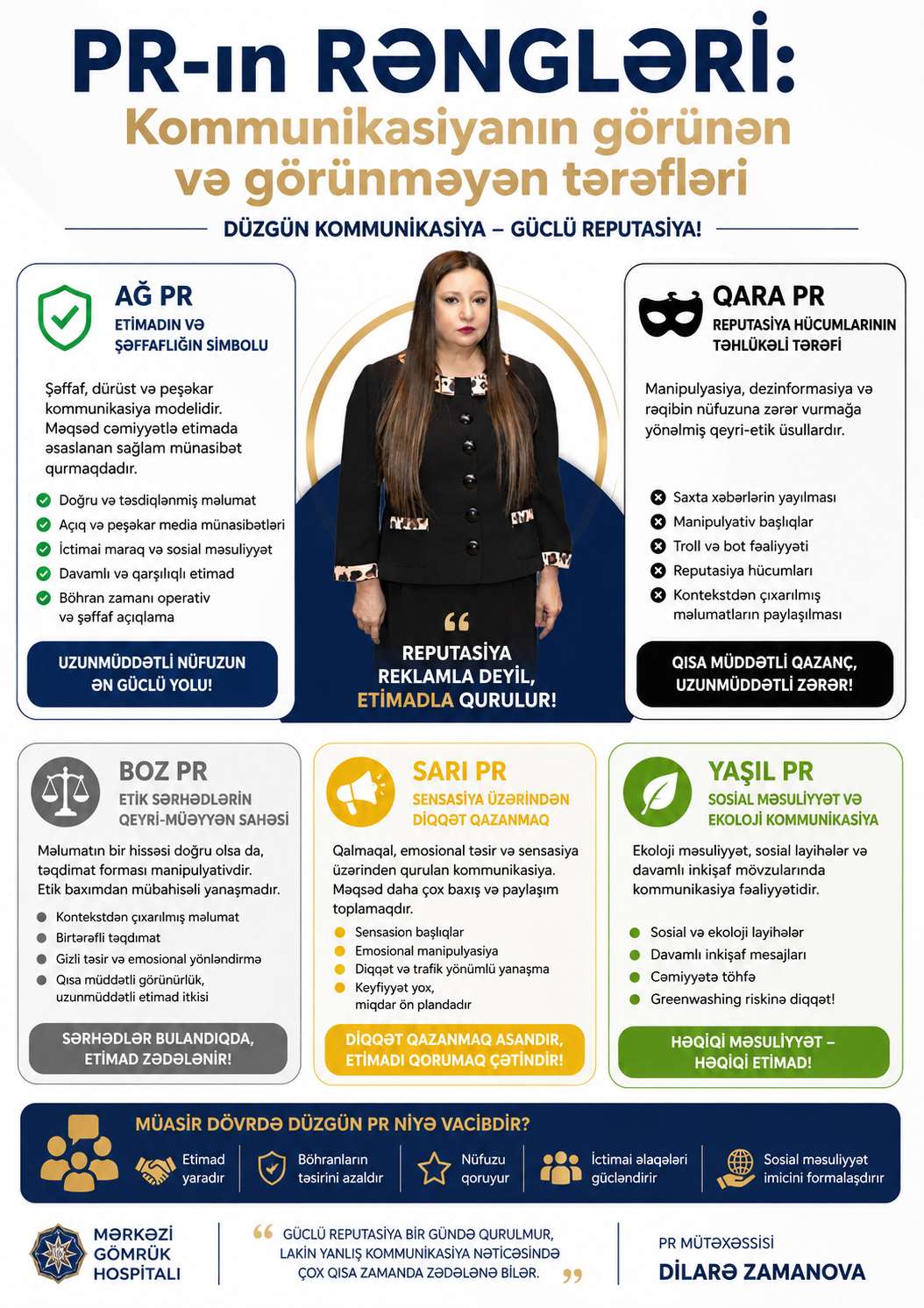
In the information age, PR is no longer merely a tool for advertising and promotion. Today, PR is a strategic management instrument that shapes the reputation of organizations, protects public trust, and enables proper communication in crisis situations. Especially with the rapid development of social media, information spreads within seconds, and public opinion is formed very quickly. Therefore, understanding PR methods and their impact has become extremely important. In professional practice, the concept of “PR colors” is often used to describe different communication approaches and their ethical levels.
White PR - a symbol of trust and transparency
White PR is the most ethical, transparent, and professional communication model. Its main goal is to provide society with truthful, verified, and reliable information, as well as to build sustainable trust between an organization and the public. White PR is focused not on short-term attention but on long-term reputation.
That is why leading companies, government institutions, and medical organizations prefer White PR principles in their communication strategies.
The core principle of White PR is transparency rather than manipulation. It does not aim to hide information, mislead, or apply emotional pressure. On the contrary, its key objective is to deliver objective and verified information.
In this model:
• Open and professional relations with the media are established;
• Only accurate and verified information is shared;
• Public interests and social responsibility are taken into account;
• Continuous and trust-based communication with society is built;
• In crisis situations, timely and transparent communication is prioritized over information concealment.
White PR is one of the most powerful tools for protecting an organization’s reputation, because trust is built not through advertising, but through honest communication.
White PR plays a particularly important role in healthcare, where trust is a key factor. Proper and clear communication of medical information builds confidence and reduces anxiety among patients and their relatives.
Black PR — the dangerous side of reputational attacks
Black PR refers to unethical communication methods aimed at manipulation, spreading misinformation, and damaging competitors’ reputations. Its goal is not to inform, but to shape public opinion through distortion of facts.
Methods of Black PR include:
• spreading fake news;
• manipulative headlines;
• use of trolls and bots on social media;
• reputational attacks;
• publishing information taken out of context.
In the digital era, Black PR has become especially dangerous, as disinformation can go viral within minutes and cause serious damage to reputations that took years to build.
Grey PR — a zone of unclear ethical boundaries
Grey PR includes communication methods that are not formally illegal or completely false, but are ethically questionable. In such cases, the information may partially reflect reality, but its presentation is aimed at emotional influence and the subtle shaping of public opinion.
Grey PR is often considered a transitional zone between White and Black PR. The main issue is not complete falsehood, but distorted interpretation, one-sided presentation, or manipulative framing.
This approach is often used in highly competitive environments such as business, politics, and media. However, despite possible short-term effectiveness, it carries significant long-term reputational risks.
Yellow PR — sensation as a tool for attention
Yellow PR is based on sensationalism, emotional impact, and provocative headlines. Its main goal is to attract maximum attention, views, and content sharing.
This format is especially widespread on social media platforms, where emotional and sensational content can quickly go viral. However, it may negatively affect information quality and audience trust.
Green PR — social responsibility and environmental communication
Green PR is associated with environmental responsibility, sustainable development, and social initiatives of organizations.
However, there is also a risk of “greenwashing,” when organizations create an image of being environmentally responsible without real actions. This can lead to a loss of trust from the audience.
Why is modern PR important?
In conditions of information overload, people evaluate not only the information itself but also its source. Reputation has become one of the key strategic assets today.
Professional PR:
Builds trust;
Reduces the impact of crises;
Protects organizational reputation;
Strengthens public relations;
Forms an image of social responsibility.
Especially in healthcare, public administration, and public service sectors, communication mistakes can lead to serious consequences. Therefore, ethics, transparency, and professionalism must remain core principles of PR.
The colors of PR reflect different sides of the communication world. White PR symbolizes trust and honesty, while Black and Grey PR highlight the risks of manipulation and distortion of information. In today’s world, successful organizations strive not only to be visible but also to be trusted.
Because a strong reputation is not built in a day, but it can be lost due to a single incorrect communication mistake.
PR Specialist of the Central Customs Hospital
Bütün xəbərlər Facebook səhifəmizdə










.jpg)
.jpg)










.jpg)

.png)

 USD
USD
 EUR
EUR
 GBP
GBP
 RUB
RUB