


.jpg)
In the past, companies used to wait for journalists to call them. Today, the strongest brands create their own newsrooms, build their own audiences, and manage the information agenda themselves.
In recent years, one of the biggest transformations in the information landscape has been the rapid rise of the Own media strategy. Companies are no longer limited to television coverage and news websites.
Traditional media remains important. However, reputation is no longer shaped only by what others write about a company. What matters most is how the company communicates about itself.
Own media refers to information platforms fully controlled by a company. These include official websites, corporate blogs, Telegram channels, YouTube platforms, LinkedIn pages, as well as internal media systems for employees.
This model allows companies to create their own voice. Brands now communicate directly with their audience, without intermediaries. The speed of information dissemination has increased many times compared to previous years, fundamentally reshaping communication models.
The Information Era Has Changed
The increasing speed of information has completely transformed communication processes. If news is delayed, social media fills the gap. If an official statement is late, rumors grow stronger. Uncontrolled information becomes a reputational risk. Therefore, own media is no longer a choice -it is a necessity.
During crises, people first turn to a company’s own platforms. If the company remains silent, an information vacuum is created, which is quickly filled by speculation. That is why, in international PR practice, the principle of the “first official statement” is becoming increasingly important.
The first official statement can determine the fate of a company’s reputation. Organizations without their own media lose this information race. Some companies are now building not only business structures but also full media structures. These include dedicated editorial teams, video production departments, and content strategists.
The PR activity of the Central Customs Hospital can be considered one of the most systematic and notable in the region in terms of communication and healthcare management. What stands out is not only the high level of medical services but also a well-structured communication approach.
The Central Customs Hospital places special emphasis on open and transparent communication with the public. In particular, the timely dissemination of successful surgical operations, medical innovations, and expert opinions demonstrates the institution’s professional approach.
Official website of the Central Customs Hospital — https://customshospital.az/, Facebook page https://www.facebook.com/customshospital/, Instagram https://www.instagram.com/merkezi_gomruk_hospitali/, Twitter/X https://x.com/GomrukHospital, LinkedIn, YouTube https://www.youtube.com/@mrkzigomrukhospitalcustoms3382, and TikTok https://www.tiktok.com/@mrkzi.gmrk.hospit.
Today, the most effective content formats include expert interviews, backstage videos, employee stories, “a day with us” formats, educational video PR, and storytelling-based communication.
In the own media system, data and analytics also play a crucial role. Modern PR works not only with emotions but also with numbers. Reach, engagement, trust index, and audience retention have already become key indicators of reputation.
In the future, the strongest brands will not be those that only produce products, but those that manage information. Companies will increasingly build their own journalism teams, implement AI-based content systems, invest in internal media studios, and establish 24/7 communication models.
Own media is no longer just a PR trend. It is a complete transformation of the communication model. Today, strong companies do not wait for news — they create it, and they do not simply follow the agenda, they shape it.
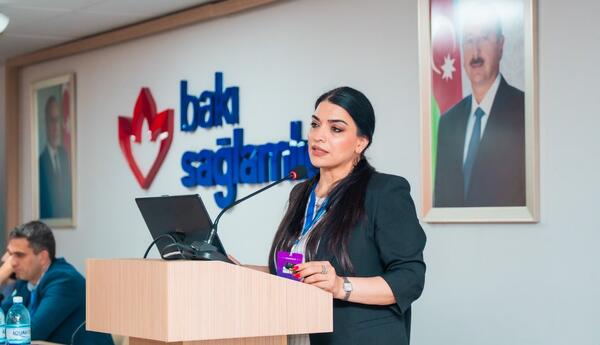
PR Specialist, Central Customs Hospital
Dilarə Zamanova

Bütün xəbərlər Facebook səhifəmizdə









.jpg)
.jpg)










.jpg)

.png)

 USD
USD
 EUR
EUR
 GBP
GBP
 RUB
RUB