



In the information society, public relations (PR) has evolved into a strategic field that shapes organizational reputation, influences public opinion, and even affects decision-making processes. In this context, a proper understanding of the concepts of “PR environment” and “communication landscape” is essential for every PR specialist.
In simple terms, the PR environment is the informational and media space in which an organization operates, while the communication landscape is the overall picture of all communication channels and audiences used within this environment.
Broadly speaking, the PR environment is not limited only to mass media. It includes both traditional information sources (television, radio, newspapers) and digital platforms (news portals, social networks, blogs), as well as other factors influencing public opinion—experts, opinion leaders, influencers, and even user-generated reviews. In other words, all sources forming the information flow around an organization are part of the PR environment.
The communication landscape represents a more systematic and strategic view of this environment. Here, the key question is not only “where to communicate,” but also “to whom, how, and through which channels to deliver information.” This means understanding which audiences are active on which platforms, which messages are effective in specific channels, which formats (articles, videos, posts, interviews, etc.) are best perceived, and at what time and frequency communication should be conducted.
For example, the same information presented as a television report, a social media post, or an expert interview may have different impacts. A PR specialist who properly structures the communication landscape takes these differences into account and delivers the message in the right form and on the right platform.
Another important aspect is that this environment is not static but dynamic.
“Static” means unchanging and stable, while “dynamic” means constantly changing, developing, and evolving. A static approach implies using the same methods without modification, whereas a dynamic approach means adapting to circumstances, introducing new ideas, and evolving strategies.
In PR terms:
Static PR means using the same messages and channels consistently.
Dynamic PR means adapting to trends, adopting new platforms, and implementing new strategies.
The communication landscape is constantly evolving and transforming. New platforms emerge, audience behavior changes, and information consumption accelerates. Therefore, a PR specialist must not only analyze the current situation but also monitor trends and continuously update their strategy.
Thus, a proper understanding of the PR environment and communication landscape enables organizations not merely to disseminate information, but to build targeted, structured, and effective communication. Ultimately, this leads to the formation of a strong reputation and the strengthening of public trust.
How has the digital era changed PR?
In recent years, the development of digital technologies has significantly transformed the field of PR. Alongside traditional channels—television, press, and radio—important roles are now played by:
social networks (Facebook, Instagram, LinkedIn, Twitter, etc.),
news websites and blogs,
influencers and content creators.
All these elements actively influence public opinion formation. This means that a PR specialist must be able to work not only with journalists but also with diverse audiences. Information has increased, while audience attention has become limited, making it more difficult to deliver messages without a clear strategy.
Why is it important to understand the communication landscape?
A key condition for successful PR activity is proper situational analysis. To do this, the following questions must be answered:
Who is the target audience?
Where do they obtain information?
Which topics are most important to them?
On which platforms are they most active?
For example, communication aimed at a young audience cannot be identical to communication intended for governmental institutions. Each audience requires an individual approach.
The power of messages: simplicity and precision
One of the main challenges of modern PR is information overload. People are exposed to a large number of messages daily; therefore:
messages must be concise,
clear,
and goal-oriented.
A well-formulated message builds trust, while a weak one goes unnoticed. One of the key tasks of a PR specialist is to communicate complex information in a simple and accessible way.
PR specialist as a reputation manager
In modern conditions, a PR specialist is not merely an information transmitter but a manager who shapes and protects organizational reputation.
This role becomes especially important in crisis situations, such as:
the spread of negative information,
increased criticism on social media,
public dissatisfaction.
In such cases, timely and well-structured communication helps preserve organizational reputation.
Social media: opportunities and risks
Social media has become an integral part of PR. It is no longer just a publishing platform but an environment where public opinion is formed, reputation is built, and crises are managed.
Opportunities:
direct communication with audiences,
rapid information dissemination,
feedback collection,
image building,
targeted communication.
Risks:
rapid spread of misinformation,
increase in negative feedback,
reputational crises,
difficulty in controlling information.
Monitoring and analysis
Monitoring is the continuous tracking of information about an organization in the media space.
Analysis is the transformation of this data into managerial decisions.
They enable:
reputation protection,
early detection of crises,
audience understanding,
measurement of communication effectiveness.
Monitoring and analysis are interconnected and form the foundation of strategic PR.
How to measure PR results?
Modern PR requires performance evaluation. For this, KPIs (Key Performance Indicators) are used:
number and quality of media publications,
brand awareness,
social media engagement,
website traffic,
public opinion balance.
It is important to consider not only quantitative but also qualitative indicators.
Development of the PR specialist
PR is a dynamic field requiring continuous development:
studying new communication models,
tracking trends,
improving practical skills.
Practice plays a key role—skills are developed through real-life situations.
Measuring results and continuous development are the foundation of effective PR. A professional approach is not just about distributing information, but achieving measurable results, analyzing them, and continuously improving.
Such an approach ensures strong reputation, high levels of trust, and long-term success for organizations.
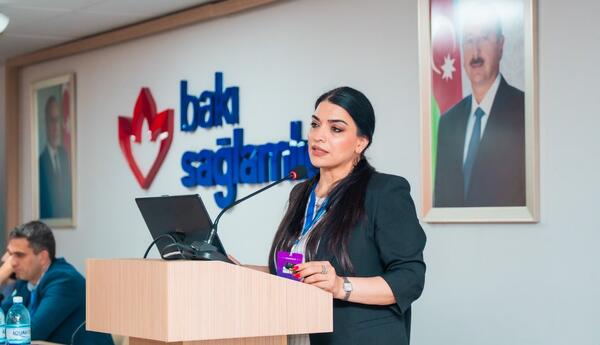
PR Specialist of the Central Customs Hospital
Dilyara Zamanova
Bütün xəbərlər Facebook səhifəmizdə






.jpg)
.jpg)










.jpg)

.png)

 USD
USD
 EUR
EUR
 GBP
GBP
 RUB
RUB