


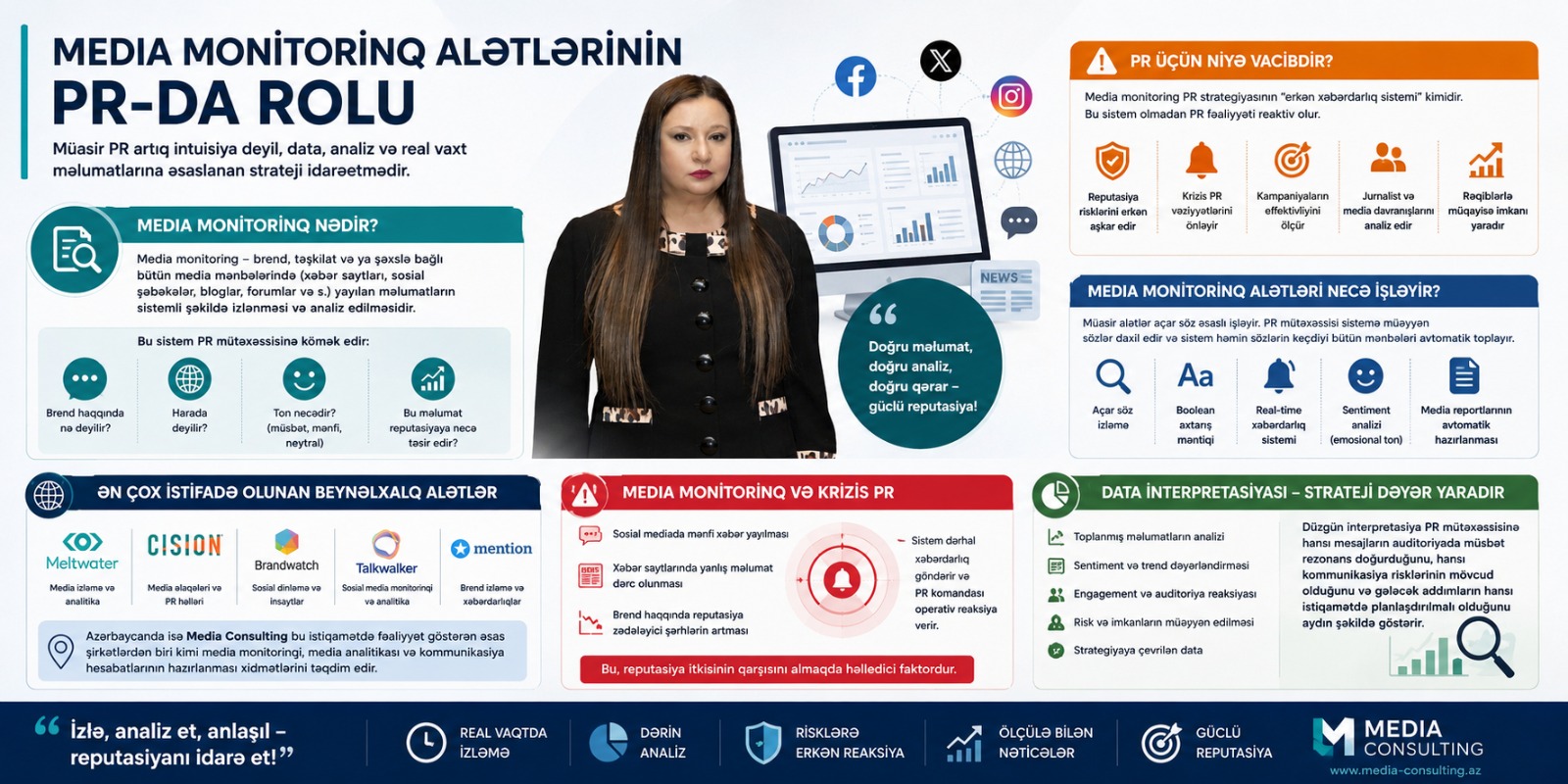
PR has long gone beyond simply preparing press releases, building relationships with journalists, and distributing information to media outlets. The rapid development of the digital environment has fundamentally transformed PR activities, turning them into a more strategic, measurable, and data-driven management system. Today, successful PR must answer not only the question “what are we saying,” but also “how is this message perceived,” “where is it being distributed,” and “how is public opinion about the brand being formed.”
In this context, media monitoring tools have become one of the central components of the PR ecosystem. These tools enable systematic tracking of the entire flow of information about a brand, organization, or individual across various media channels, structuring the collected data and conducting in-depth analytical analysis. While in traditional PR information often arrived with delays, modern media monitoring systems operate in real time, allowing PR professionals to make prompt decisions.
These technologies perform not only an information-gathering function but also help define its context. In other words, a news item or social media post is not just recorded — its tone (positive, negative, or neutral), speed of dissemination, audience impact, and other parameters are analyzed. This allows PR specialists to understand not only “what happened,” but also “why it happened” and “what should be done next.”
Moreover, media monitoring tools act as a kind of mirror reflecting how a brand “lives” in the media space. They enable organizations to continuously track their reputation, identify potential risks at an early stage, and manage crisis situations. Collecting information from social networks, news portals, blogs, and other digital platforms into a unified system creates conditions for a more precise and measurable PR strategy.
As a result, media monitoring tools serve as a strategic mechanism of modern PR management. They elevate PR practice from an intuitive approach to a professional model based on data, analytics, and real-time information. An intuitive approach is “it seems to me this is right” or “roughly this is what should be done.” A systematic approach is based on facts, statistics, strategy, analytics, and measurable results.
What is media monitoring?
Media monitoring is the systematic tracking and analysis of all information about a brand, organization, or individual published across various media sources (news websites, social networks, blogs, forums, etc.). This system helps PR professionals answer key questions: what is being said about the brand, where it is being said, what the tone of the information is (positive, negative, or neutral), and how this information affects reputation.
Why is media monitoring important for PR?
Media monitoring can be described as a “early warning system” for PR strategy. Without it, PR activity becomes reactive, meaning intervention occurs only after a problem has already emerged. Effective media monitoring helps to:
- identify reputational risks in time
- prevent PR crises
- measure campaign effectiveness
- analyze journalist and media behavior
- compare performance with competitors
How do media monitoring tools work?
Modern tools operate based on keywords. A PR specialist enters specific terms into the system, and it automatically collects all sources where these words appear. Key functions include keyword tracking, Boolean search logic, real-time alerts, sentiment analysis (identifying emotional tone), and automated media reporting.
Most popular international tools
Among widely used platforms in the global PR industry are Meltwater, Cision, Brandwatch, Talkwalker, and Mention. These platforms are actively used by global PR teams in media analytics, social listening, reputation management, and crisis communications.
In Azerbaijan, one of the leading companies in this field is Media Consulting, which provides media monitoring, media analytics, and communication reporting services.
Media monitoring tools enable PR teams to track media in real time, conduct sentiment analysis, and prepare detailed reports.
Media monitoring and crisis PR
In crisis situations, media monitoring systems play an especially critical role. The spread of negative information on social media, publication of inaccurate news, or a rise in reputationally damaging comments is immediately detected and controlled.
In such cases, the system sends instant alerts, and the PR team responds promptly. This becomes a decisive factor in preventing reputational damage.
Data interpretation
Data interpretation is not simply presenting collected information in statistical form; it is the process of correctly analyzing the meaning behind the data and transforming it into strategic decisions. In PR, data interpretation allows professionals to evaluate media monitoring results, audience reactions, engagement levels, and sentiment analysis to determine communication effectiveness.
Proper interpretation helps PR specialists understand which messages generate positive audience response, what communication risks exist, and how future strategies should be planned.
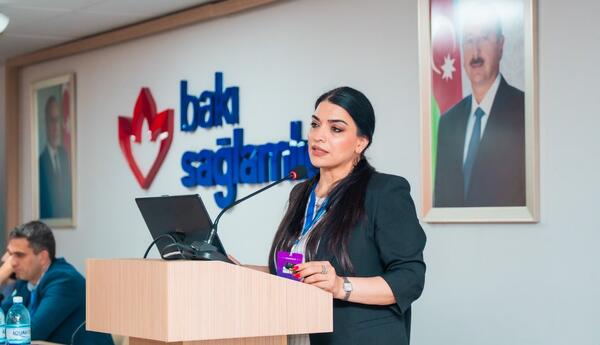
PR Specialist of the Central Customs Hospital
Dilara Zamanova
Baku, Azerbaijan
[email protected]
Bütün xəbərlər Facebook səhifəmizdə







.jpg)
.jpg)







.jpg)

.png)

 USD
USD
 EUR
EUR
 GBP
GBP
 RUB
RUB