


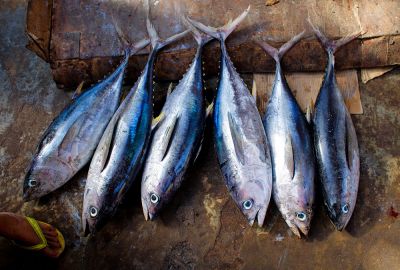
the Environmental Protection Agency and Food and Drug Administration proposed a minimum weekly level for fish consumption for the first time. Women who are pregnant, breast-feeding or trying to become pregnant, it said, should eat up to 12 ounces of fish per week. After all, fish is a great source of lean protein and omega-3 fatty acids.
The problem: Fish also can be a good source of mercury — and, in an article published Thursday, Consumer Reports is taking issue with the new guidelines.
"We’re particularly concerned about canned tuna, which is second only to shrimp as the most commonly eaten seafood in the United States," said Jean Halloran, director of food policy initiatives for Consumers Union, the advocacy arm of Consumer Reports. "We encourage pregnant women to avoid all tuna."
The FDA’s new recommendation comes after an FDA study revealed one in five women were avoiding fish during pregnancy. "Emerging science now tells us that limiting or avoiding fish during pregnancy and early childhood can mean missing out on important nutrients that can have a positive impact on growth and development as well as on general health," said Stephen Ostroff, the FDA’s acting chief scientist, in a statement.
The FDA lists on its Web site the average amount of mercury found in different types of fish. Most types of tuna have relatively high mercury levels. Unfortunately, according to Consumer Reports, the FDA may be underestimating the danger.

Bütün xəbərlər Facebook səhifəmizdə

.jpg)


.jpg)
.jpg)
.jpg)

























 USD
USD
 EUR
EUR
 GBP
GBP RUB
RUB