


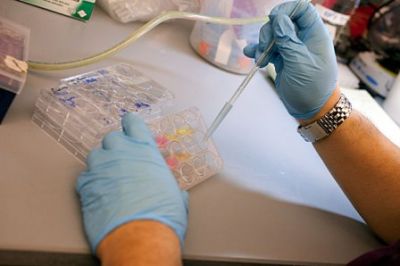
New research by scientists revealed how HIV triggers a signal telling an infected immune cell to die.
The new finding has implications for preserving the immune systems of HIV-infected individuals.
HIV replicates inside infection-fighting human immune cells called CD4+ T cells through complex processes that include inserting its genes into cellular DNA.
SIA, citing Fars News Agency, reports that the scientists at the US National Institute of Allergy and Infectious Diseases discovered that during this integration step, a cellular enzyme called DNA-dependent protein kinase (DNA-PK) becomes activated. DNA-PK normally coordinates the repair of simultaneous breaks in both strands of molecules that comprise DNA.
As HIV integrates its genes into cellular DNA, single-stranded breaks occur where viral and cellular DNA meet.
Nevertheless, the scientists discovered, the DNA breaks during HIV integration surprisingly activate DNA-PK, which then performs an unusually destructive role: eliciting a signal that causes the CD4+ T cell to die. The cells that succumb to this death signal are the very ones mobilized to fight the infection.
According to the scientists, these new findings suggest that treating HIV-infected individuals with drugs that block early steps of viral replication -- up to and including activation of DNA-PK and integration -- not only can prevent viral replication, but also may improve CD4+ T cell survival and immune function.
The findings also may shed light on how reservoirs of resting HIV-infected cells develop and may aid efforts to eliminate these sites of persistent infection.
Untreated HIV infection destroys a person's immune system by killing infection-fighting cells, but precisely when and how HIV wreaks this destruction has been a mystery until now.

Bütün xəbərlər Facebook səhifəmizdə
.jpg)


.jpg)
.jpg)

.jpg)


























 USD
USD
 EUR
EUR
 GBP
GBP RUB
RUB