



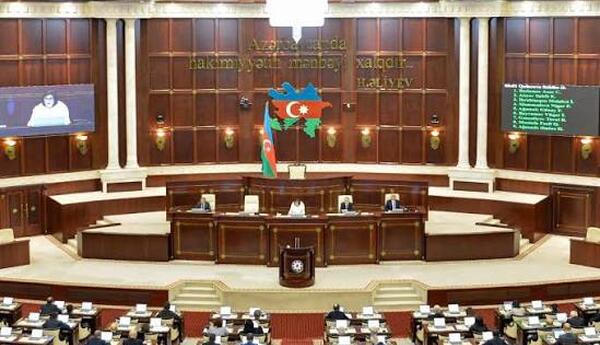
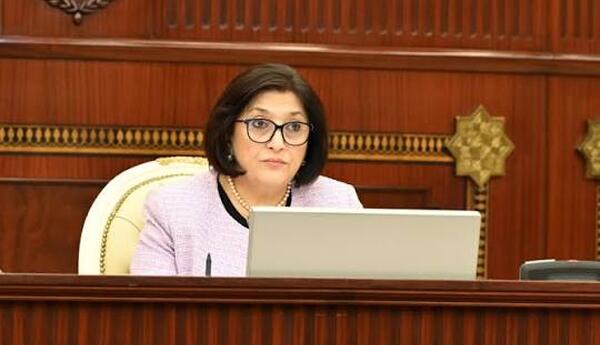
Complaints about bribery and corruption went up 30% last year, Azerbaijan's human rights commissioner, Elmira Suleymanova, told parliament.
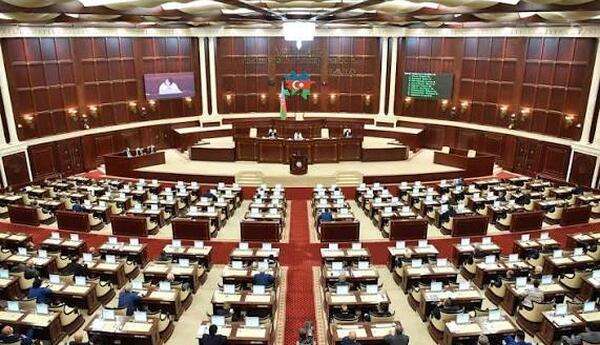
Making her annual report to the Milli Majlis, the ombudswoman said that her office had received 797 complaints from the public about corruption, 30.6% more than in 2010.
The complaints concerned illegal action by public officials and the poor work of some state structures and organizations responsible for ensuring citizens' legal interests.
The human rights commissioner sent 102 of the complaints and appeals about corruption and bribery to the prosecutor’s office.
A criminal case was launched into one of the complaints, while 21 appeals were upheld, 11 cases were sent to court, 22 complaints were investigated and five are currently under investigation. Forty-three complaints were turned down for a criminal case.
Elmira Suleymanova drew attention in her report to cases of bribery in military commissioning offices and their medical commissions and noted the importance of increasing control over this sphere.
Noting that many houses have been built without proper registration in and around Baku in the past 15 years, the ombudswoman suggested the registration of illegally built houses. She proposed that an inventory be drawn up of houses built on the former Hovsan, Bina and Ramani state dairy farms, and in the Alatava, Vorovski, Khutor, NZS, UPD, Keshle and Yasamal areas of Baku.
The ombudswoman said she had received 1,246 complaints about the violation of labour rights last year, an increase on 2010.
She said that of the complaints about violations of human rights, 1,179 were associated with the work of the courts. Two of these concerned the Constitutional Court, 109 the Supreme Court, 191 the appeal courts and 887 the courts of first instance.
The complaints concerned the failure to give notification of time and place of trials, rudeness, failure to provide, or a delay in providing, copies of court decisions, failure to send appeals or cassations on time, red tape, failure to carry out decisions on time and reluctance on the part of judges to monitor the implementation of decisions.
Imishli District was the executive authority with the most complaints against it (79).
The human rights commissioner's report was accepted by MPs, with100 votes in favour and one against.
Mubariz Gurbanli, an MP from the ruling New Azerbaijan Party, said in the debate on the report that major work was under way in Azerbaijan to protect human rights.
However, he added that people often had to appeal to parliament or the human rights commissioner when local authorities failed to tackle their concerns.
"Therefore, I think that these complaints should be viewed in a timely fashion on the ground. The well-founded complaints of the public should be heard and acted upon. The relevant structures should coordinate their work to investigate and uphold those complaints."
Sabir Rustamkhanli, chairman of the Civic Solidarity Party, also targeted local authorities, in the wake of the protests that led to the dismissal of the head of Guba executive authorities.
"Our rights are frequently violated too. It is as though there is bureaucratic tyranny on the ground today and disrespect for the law," Rustamkhanli said. "We can see how the head of state talks to citizens and treats them on the ground. It is as though he gives a report to every citizen. However, local representatives of the president i.e. the heads of executive authorities, show disrespect to the people. And this in turn causes protest and discontent. Therefore, the report of the ombudswoman should include these cases and specific steps should be taken to prevent them."

Bütün xəbərlər Facebook səhifəmizdə






















 USD
USD
 EUR
EUR
 GBP
GBP RUB
RUB