


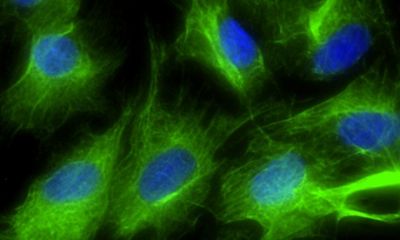
Reprogrammed cells created in a laboratory have been used to build a complete and functional organ in a living animal for the first time.
British scientists produced a working thymus, a vital immune system "nerve centre" located near the heart.
The technique, so far only tested on mice, could provide replacement organs for people with weakened immune systems, scientists believe. But it might be another 10 years before such a treatment is shown to be effective and safe enough for human patients.
The research bypassed the usual step of generating "blank slate" stem cells from which chosen cell types are derived.
Instead, connective tissue cells from a mouse embryo were converted directly into a completely different cell strain by flipping a genetic "switch" in their DNA.
The resulting thymic epithelial cells (TECs) were mixed with other thymus cell types and transplanted into mice, where they spontaneously organised themselves and grew into a whole structured organ.
Professor Clare Blackburn, from the Medical Research Council (MRC) Centre for Regenerative Medicine at the University of Edinburgh, who led the team of scientists, said: "The ability to grow replacement organs from cells in the lab is one of the 'holy grails' in regenerative medicine. But the size and complexity of lab-grown organs has so far been limited.
"By directly reprogramming cells we've managed to produce an artificial cell type that, when transplanted, can form a fully organised and functional organ. This is an important first step towards the goal of generating a clinically useful artificial thymus in the lab."
If the immune system can be compared with an army, the thymus acts as its operations base. Here, T-cells made in the bone marrow are primed to attack foreign invaders, just as soldiers are armed and briefed before going into battle.

Bütün xəbərlər Facebook səhifəmizdə

































 USD
USD
 EUR
EUR
 GBP
GBP RUB
RUB