


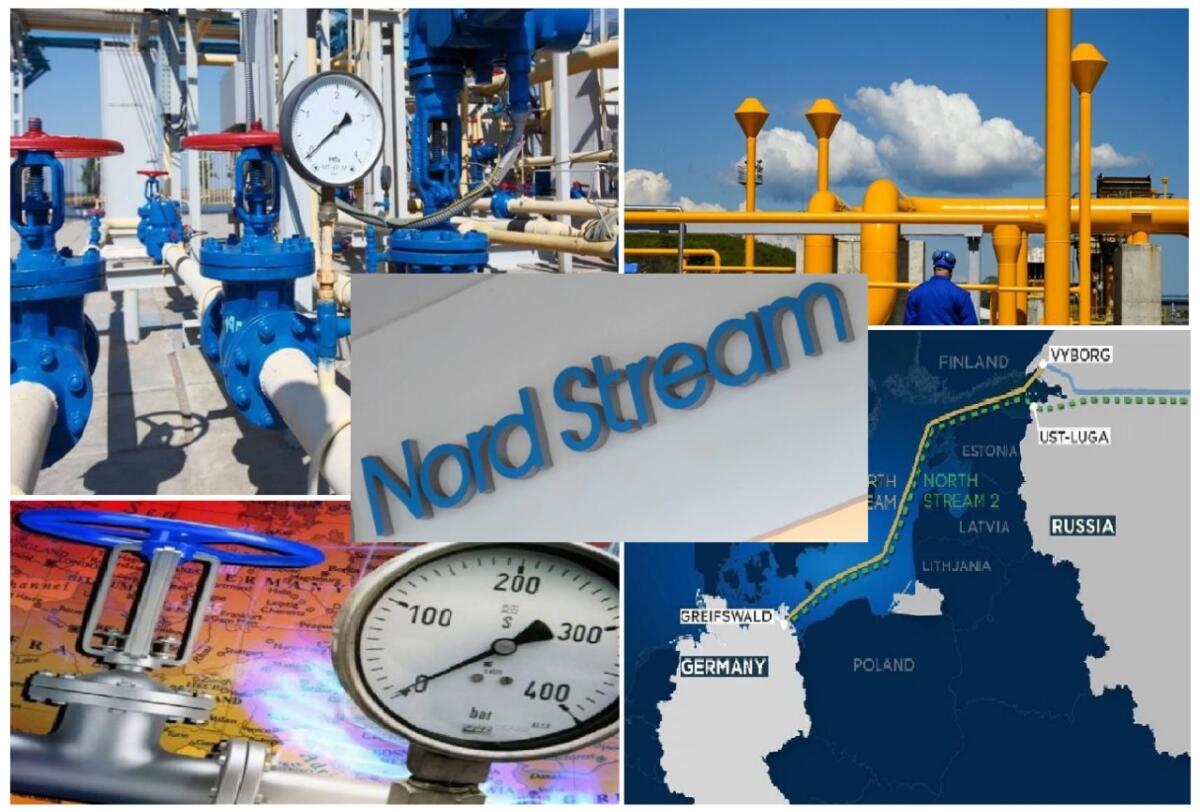
In the existing conditions the events taking place at the global level are indeed in the center of the world's attention, and the expectations and approaches are different in behind the scenes of these events. However, the confrontation between the West and Russia is such that it is expected by everyone for the parties to take some action against each other sooner or later. More precisely, if the West imposes sanctions against Russia, then it is assumed that Russia would respond adequately.
As we known, Russia, or rather, the company "Gazprom" of the country announced that the daily supply of gas to Europe through the "North Stream" pipeline will decrease by 33 million cubic meters from Wednesday, which means a decrease of up to 20 percent.
It goes without saying that the company announced the reasons for this. It was stated that the reason was the stoppage of one of the two working turbines, but it is not treated unambiguously and there are different approaches. For example, there are those who see it as a new gas war against Europe. Of course, there must be a real core of this matter and what it consists of is quite interesting.
There is no doubt that Russia, faced with sanctions, wants the energy crisis in Europe to expand further, although it does not admit it. True, the Russian side says that they are not to blame for the problem. Even the delay in repairs is said to be not due to their fault. If it is really so, then what could be the core of the matter? At this point, it is considered possible that Russia, in its turn, will pursue with the intention of suppressing the other side. Considering this situation, many countries are calling for the lifting of sanctions, specifically sanctions against Russia, and this is not in vain. It goes without saying that it is reasonable and logical that Russia will take adequate steps against the sanctions it is facing. That is why there have been calls for the lifting of sanctions, and this may be Russia's goal in suppressing Europe.
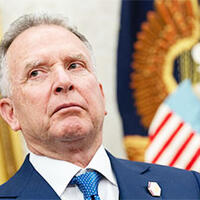
As mentioned, the situation is not the same as before, and the number of countries that want to take such a unified position in the European Union itself is decreasing, and the number of those joining the call for the lifting of sanctions is increasing. For example, Hungarian President Pal Schmitt himself has made such a call. In general, the fact that the president of a country makes such a request cannot be considered an ordinary case in the current circumstances and indicates interesting points.
It has been known for a long time that there is pressure on Russia from the West, and it is predicted that these pressures will continue for a long time. The point is that the Russian side is not going to ignore this and no doubt that official Moscow will take adequate measures. At the same time, it is clear as day that Russia will not compromise against Ukraine. Russia can use all means to further increase the pressure on Ukraine and the West. It is true that the West also expects its own adequate reaction, and we can witness this in the near future, but currently, a 20 percent reduction in gas supplies from Russia to Europe is understood as just the use of Moscow's pressure mechanism.
European countries, which are already facing the problem of energy security, are in a difficult situation with the reduction of gas supply from Russia by 33 million cubic meters, which is well understood by both sides, and even the West itself unequivocally admits that this is a means of pressure. The West understands that a significant reduction in gas supply will result in a price increase, and the first signs of this are already being observed. The fact that the price of each thousand cubic meters of gas is 1950 dollars confirms what has been said. He confirms that Russia has already achieved certain results with its pressures. The fact is that Russia will not be satisfied with this. Official Moscow believes that gas prices will be even higher due to reduced supply. As we remember, at one time, to be more precise, in March, the price of each cubic meter of gas was around $2,500. In this regard, there is nothing unusual in Russia's hope that the price of gas will increase further. That is, it is indeed possible, even closer to the truth, that the price of gas may be even higher in the near future. Moscow is also looking forward to this. It expects that Europe will have to settle with Russia under pressure.
It goes without saying that it is not difficult to understand the European Union, which wants to obtain additional sources of gas from gas exporting countries. Taking measures in advance, that is, before winter, is one of the urgent measures to meet the gas demand of European countries. Currently, the intention of the European Union to obtain additional gas sources from Algeria, Egypt, as well as Azerbaijan is understandable and is evaluated as a step taken in the right place as a precautionary measure. The most important among the objectives is also the prevention of price increase.
Undoubtedly, if they do not take care of the supply of gas to European countries in the winter season, the situation may become even more tense due to the further increase in the demand for gas and energy. When it comes to energy security, of course, these points are taken into account. It is also assumed that with the onset of cold seasons, the further increase in energy demand will at least start with price increases, and serious problems will appear in most European countries. In this regard, the distress of Europe was fully expected, and a significant reduction in gas supply was probably calculated in advance by Russia, and the main intention in this matter is to put pressure on Europe and the West in general.
In fact, it becomes quite clear what is happening and what was being thought. On the one hand, the West is putting pressure on Russia against the backdrop of sanctions, and on the other hand, the Russian side is of the opinion that it has responded adequately by reducing energy supply. Official Moscow is focused on putting pressure on Europe and is already doing so in terms of gas supplies. Now the reduction of gas supplies from Russia to Europe is seen as a kind of energy war, or a hybrid war. It is difficult to predict how long this war will last. At least Europe, which will face the demand for gas and energy with the arrival of cold seasons, especially winter, should either prepare for everything now, achieve gas supply from new sources, or reach a general agreement with Russia, or face serious problems in terms of energy in front of them.
For now, it is observed that the energy war, or the hybrid war, continues.

Bütün xəbərlər Facebook səhifəmizdə
.jpg)






 USD
USD
 EUR
EUR
 GBP
GBP RUB
RUB