


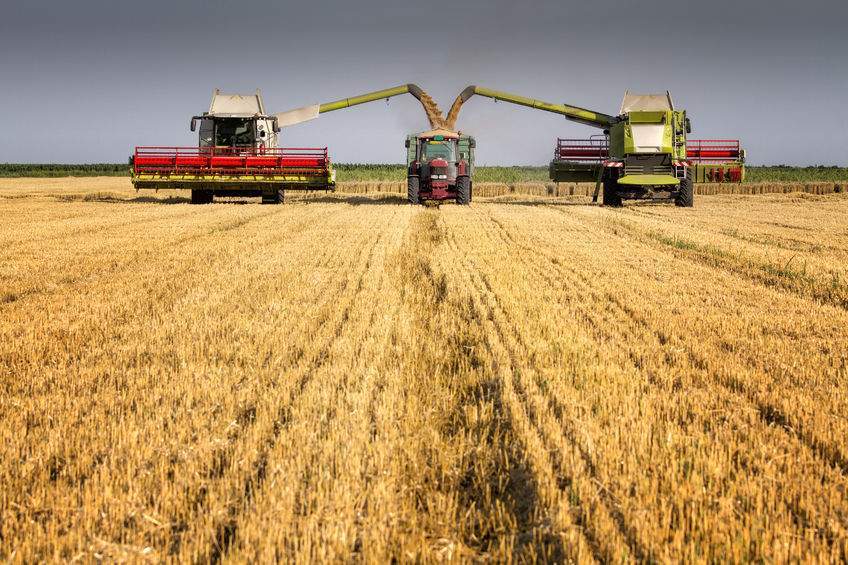
According to the IGC's forecasts for the grain market at the end of last year, global wheat production in the 2021/2022 harvest season was expected to increase by 0.5 percent compared to the previous season to 777 million tons. However, recent analysis has shown that, conversely, global production will decline this season.
The main reason for this is the drought in the world. Drought and high temperatures in the United States, Canada and Russia over the past year have seriously affected wheat production. In the United States, for example, drought and high temperatures have led to a 40 percent drop in spring wheat production in 2021.
The war in Ukraine, which began earlier this year, has exacerbated the situation. As a result, large wheat producers restricted wheat exports and began to build up more wheat stocks. As it is known, China, the largest wheat producer, has stored 50 percent of the world's wheat and refuses to sell it. Russia, the world's largest exporter, has raised wheat export duties and restricted exports. India, one of the three largest wheat producers, was able to produce less wheat due to the drought, which did not allow it to export the remaining part of its already large demand. Other wheat producers also reduced sales and began to build up more reserves. In this situation, many countries began to buy and store more wheat from any possible sources. As a result, the agitation in the wheat market has increased, and wheat prices continue to rise.
Along with the decline in wheat production, the use of wheat has increased in recent years. Thus, the Chinese began to use more wheat, which sharply increased global consumption.
Wheat production has become even more important. Currently, the world's major wheat producers are China, India, Russia, the United States and France. These countries account for about 52% of global wheat production. Although wheat production has increased in recent years, the price of wheat has begun to rise as demand has increased.
At the beginning of 2021, the average price of 1 ton of wheat was $275, but by the end of the year, the price had risen by 12 percent to $308. At present, the price is around $450.
The fact that global wheat stocks are only 2 months old exacerbates the situation, but in many countries, the start of the wheat harvest could give some hope. However, this year the world is expected to harvest less due to drought and global warming, which does not give hope.
In Azerbaijan, wheat is the main agricultural product to ensure food security. For this reason, wheat has a special weight in the structure of crops. Thus, in 2021, wheat was planted on 595,000 hectares in the country, which is about 40 percent of the total sown area. The country's wheat production in 2021 amounted to 1.9 million tons.
Azerbaijan's annual demand for wheat is about 3.5 million tons. The country's self-sufficiency in food wheat is 57 percent, which means that a significant part of domestic demand is met by imports.
In general, in recent years, Azerbaijan imports more than 80 percent of its wheat from Russia. Last year, a total of $331 million worth of wheat was imported, of which $318 million came from Russia. 98% of grain from Russia is wheat for consumption.
As we have a strategic alliance agreement with Russia, we can say that Azerbaijan will not have a problem with the volume of wheat imports. But we can not say this about the price of wheat. The rise in food wheat prices could lead the government to raise prices for flour and bakery products.
Moreover, it is not just a matter of bread. Wheat is widely used in livestock and poultry, which can lead to an increase in the cost of meat and dairy products and higher prices. Therefore, the government should pay more attention and support to the agricultural sector and use all possible opportunities to maximize food production.
With the onset of the global food crisis, the country's food production, especially food grain production, is extremely important. For this purpose, various state support measures are being implemented for agricultural producers. In 2021, the subsidy per hectare of wheat will be about 35-40 percent of the cost of wheat. From 2022, the amount of subsidy per hectare will increase to 240 manat.
In addition, irrigation water is offered to wheat producers at subsidized prices. Along with farmers, those engaged in flour production also benefited from state subsidies last year. Thus, in February-September 2021, those engaged in the production of flour were given a subsidy of 35 manat per ton of flour sold. The supply of fertilizers is also subsidized by the state.
In addition, the import and sale of wheat in the country, the production and sale of wheat flour and bread are exempt from VAT until January 1, 2024, which contributes to the low cost of flour.
However, as a result of Azerbaijan's high dependence on food wheat imports, the prices of wheat and wheat products, especially flour and flour products, depend on foreign markets. Russia's blockade of wheat exports to regulate its exports, its reduction in exports to other grain exporters, and rising prices cannot but pass unnoticed to the Azerbaijani market. If we take into account that wheat flour is the main raw material for the production of bread and other flour products, which have a special weight in the diet of the population in Azerbaijan, then it becomes clear what a threat it is in terms of food security. Consumption of flour in Azerbaijan in 2020 averaged 85 kilograms per capita, which is higher than in wheat-producing countries. Thus, in developed countries, per capita flour consumption is about 60 kilograms per year.
Azerbaijan has the potential to increase grain production, especially wheat. There is great potential for wheat cultivation in the liberated areas. Until 1990, wheat produced in the region accounted for 15 percent of the country's total production. Taking this into account, it can be said that the return of arable lands in the liberated territories to crop rotation can increase the country's self-sufficiency in wheat from the current 57% to 65%. If you use the opportunities in other regions, you can meet 75% of the grain demand through local production.
The global food crisis is heating up, and there is no doubt that famine and inflation will continue. We are not yet able to fully ensure our food security, and our dependence on imports is close to 50 percent. For this reason, it is important to implement fast and large-scale programs in the agricultural sector, to maximize state support.

Bütün xəbərlər Facebook səhifəmizdə
























 USD
USD
 EUR
EUR GBP
GBP RUB
RUB