


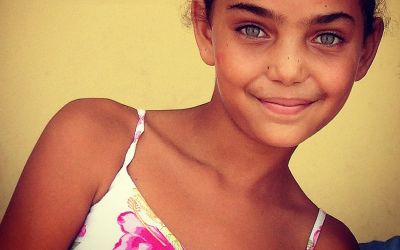
Syrian women and girls are facing increased danger from sexual exploitation in the very refugee camps where they sought safety.
In the refugee camps for Syrians and Palestinians at Shatila in southern Beirut, I met a 12-year-old refugee named Maryam whose face would give Adriana Lima a run for her money. Her skin radiates deep golden-brown and her light olive eyes evoke the iconic 1985 National Geographic cover of an Afghan girl. As she walked through the camp streets, she turned away lurid leers with a troubled glance. Old men in town ogled her. Aid workers befriended her, offering her parents "sponsorship" for their promising daughter, and she became a popular object of photographs by our workshop team leaders, even me. She knows she’s beautiful, but she doesn’t know that her beauty puts her at risk in the very camps where she seeks safety.
Maryam is the child of refugees, her mother is Palestinian, and her father Syrian. She is rootless and stateless, having little in the way of rights or protection from exploitation. She lacks the wealth and luck of Adriana Lima, who was ushered into a life of privilege and superstardom as a teenager. Instead, she lives in miserable circumstances, only made more miserable by the attention her beauty earns. At the tender age of 12, her stunning feline features, with little covering them, earn her significant attention, most of it negative. Her rose-in-the-desert beauty was on display for every well-meaning journalist, humanitarian and horror-voyeur to observe and document in a macabre sideshow of survival.
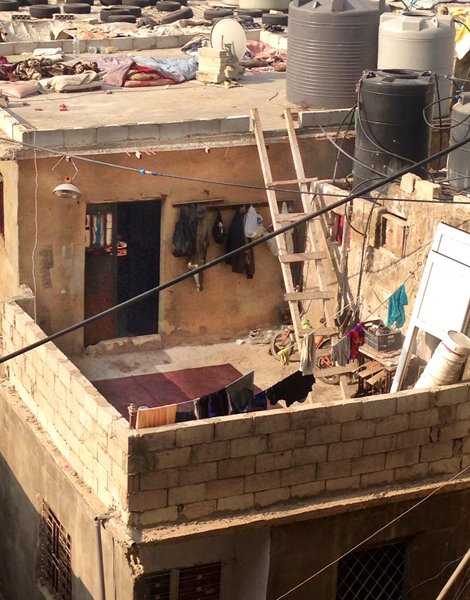
Since the spring of 2011, 1.7 million Syrians have crowded into Lebanon, a country of 4.5 million, to escape mortal danger, kidnapping, and rape in the conflict devastating their homeland. Already at capacity with displaced Palestinians, Shatila is overwhelmed by Syrian refugees flooding across the border from Damascus and Aleppo. Families of four and five cram into one-room shares without running water or reliable electricity.
I spent the last week of August in Shatila and the soupy Bekaa Valley in Lebanon leading a music workshop for 1,200 Syrian children, including Maryam, for a school year that may or may happen this fall. Distance, transportation costs, language barriers, missed enrollment dates and parents’ lack of understanding of educational options for their children are some of the obstacles facing what the the Office of the United Nations High Commissioner for Refugees (UNHCR) estimates as 200,000 refugee children in Lebanon displaced by the Syrian civil war.
As an American traveler in a region scarred by conflict, I was prepared by nonprofit workshop leaders who had worked in the Syrian camps in Turkey and Jordan to expect kids coming in with burns, bandages, and missing limbs. But I was haunted by the psychic trauma all around me. Three-quarters of those displaced in Lebanon are women and children who have lost a family member to war and remain vulnerable inside and outside of their new community. A generation of Syrian kids have the far-away gazes of battle-hardened soldiers returning from war.
Displaced girls, especially, face the triple jeopardy of war, domestic violence and attacks from neighboring men. Only the immediate threat of war diminishes during the journey from Damascus to Beirut. Their new normal is neighbors, single women, engaging in survival sex with a series of resourceful men and widows pretending to call husbands who are really dead, all in a bid to seem less vulnerable to kidnappers, harassers, and attackers in their Lebanon.
According to the UNHCR, sexual assault and intimate partner violence are hard to quantify because, mostly, it is not being reported. In rural areas of Lebanon a victim’s family may limit women’s ability to leave the house, health services are too far away and a woman who is raped may be perceived as bringing dishonor to the community. Child marriage has made a strong comeback and girls as young as 15 are increasingly strong-armed into spring-winter unions by family members seeking "protection" in exchange for their girls. Statistics are not collected in Lebanon, but in Jordan, which also hosts a large Syrian refugee population, the UNHCR reports one in four refugee girls under 18 are married to men 10 or more years older. Families struggling to get by find it easier to marry off their teenage girls than to feed, shelter, and educate them.
Since the war began, sexual violence, including rape, is the most extensive form of violence faced by Syrian women and girls. A striking specimen like Maryam is especially targeted by opportunists, rapists, and exploiters. She is lucky to have two parents who support, guide, and protect her, but many displaced children do not.
Bütün xəbərlər Facebook səhifəmizdə























 USD
USD
 EUR
EUR
 GBP
GBP
 RUB
RUB