


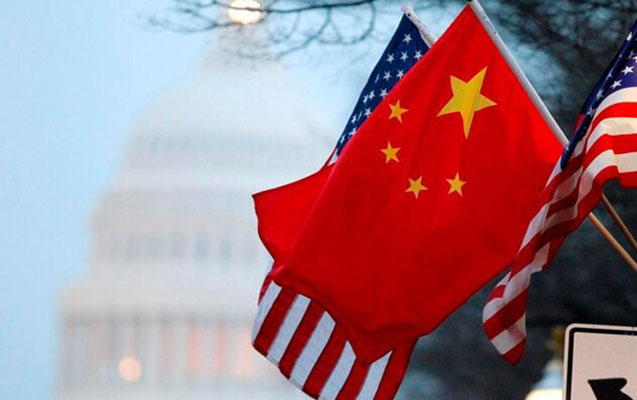
The era of U.S.-China trade cooperation is coming to an end. The White House and Congress are quietly reshaping America's economic relationship with the world's second-largest economic power by implementing a strategy to limit China's technological development that runs counter to decades of federal policy and represents the most aggressive American action to reduce Beijing's economic and military power, Politico writes.
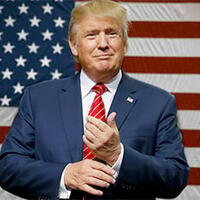
The new federal rules, executive orders and pending laws targeting China's high-tech industry, which were passed this fall and will continue into 2023, are the culmination of years of debate between the three administrations. Together, they represent an escalation of former President Donald Trump's tariffs and trade disputes against Beijing that could ultimately do more to slow China's technological and economic development and divide the two economies than anything the 45th president did while in office.
“You really have seen a sea change in the way that they’re looking at the relationship with China,” said Clete Willems, who helped develop economic policy toward China in the Trump White House as deputy assistant to the president for international economics and deputy director of the National Economic Council. “[The Biden] administration views Chinese indigenous innovation as a per se national security threat ... and that is a big leap from where we’ve ever been before.”
The new strategy, which the Biden administration internally calls its "protect agenda," will be rolled out this fall and winter in a series of executive actions. In October, the Commerce Department issued new rules aimed at preventing Chinese firms from manufacturing advanced computer chips. They will soon be followed by an executive order creating a new federal agency to regulate U.S. investment in China - the first time the federal government will have such power over American industry.
Congress is also involved, developing its own bipartisan versions of China investment screening, possible regulations on U.S. capital flows to China, and restrictions on TikTok and other applications that hawks hope the next Congress can pass.
These initiatives follow on the heels of Biden's "advancement" agenda -- using government to make America more competitive. These include the approval of hundreds of billions of dollars in subsidies for domestic manufacturing in the Chips for America Act and last summer's Inflation Reduction Act, aimed at breaking U.S. dependence on China, and new rules against American companies working with Chinese chip makers.
Together, the "protect" and "promote" programs represent a fundamental rethinking of the U.S. government's approach to China's technological advancement and, ultimately, its economic development.
National Security Advisor Jake Sullivan, tentatively outlined the actions in September. He noted that previous U.S. policy has focused on maintaining a "relative advantage" over adversaries through a “‘sliding scale approach that said we need to stay only a couple of generations ahead.”
“That is not the strategic environment we are in today,” Sullivan said. “Given the foundational nature of certain technologies, such as advanced logic and memory chips, we must maintain as large of a lead as possible.”
The speech, little noticed at the time, demonstrated a fundamental rethinking of the U.S. government's view of China's growth and development that American policymakers had been preparing for for years.
“It’s not an exaggeration to say this is a Biden doctrine of technology policy toward China,” said Eric Sayers, a former staffer for the U.S. Pacific Command during the Trump administration. “More than an escalation, it’s a grand departure from a three-decade strategy.”
It's also a departure that the White House would prefer to downplay. The administration insists that its defense program is aimed solely at containing China's technology sector, not at stopping China's overall economic growth or "decoupling" the two economies more broadly.
But this attempt to find a middle ground between disengagement and no-holds-barred economic interaction is being attacked by Chinese hawks and free-trade advocates alike.
“I think we have to start the process of strategic decoupling,” said Robert Lighthizer, Trump's former trade chief, who praised Biden's recent technical actions against China but called for a broader effort to reduce U.S. dependence on China. “Once you decide [China’s] a foe, you have to start the process of stopping the shipment of hundreds of billions of dollars each year that they’re using to rebuild their military,” he said, referring to record trade deficits with China following the pandemic.

Bütün xəbərlər Facebook səhifəmizdə























 USD
USD
 EUR
EUR GBP
GBP RUB
RUB