


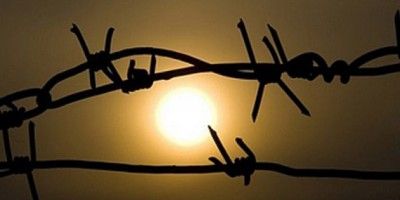
"Political prisoners" notion is widely used by the human rights organizations and some human rights advocates, SIA reports citing New Times Analytical Information. Although the term was introduced over a century ago, it still is not unequivocally and unanimously defined by the international law. No international organization possesses documents clearly determining the criteria for common, internationally recognized formula for the term. This chaotic situation enables the exploitation of the "political prisoner" term by the NGOs and human rights activists.
Experience of the past several years indicates the "political prisoner" card to be commonly used by the international NGOs and prominent political quarters aiming to influence the countries that conduct independent policies and disobey the will of the global power centers. At times, some human rights advocates are also used as a "tool" against a certain country.
A vivid example of the abuse of the "political prisoner"’ issue is the activity of human rights advocate Christoph Strasser, a human rights rapporteur of the Parliamentary Assembly of the Council of Europe. It must be stressed that similar to other international organizations, the Council of Europe has not provided a description of the "political prisoner". Nevertheless, the issue has been brought up into the agenda since 2001, the eve of the membership of Azerbaijan and Armenia to the Council of Europe. As of then, Christoph Strasser is attempting to "politicize" prisoners in Azerbaijan, based on self-defined criteria. Thus, Strasser’s subjective conclusions based activity has soon become a means of pressure in the hands of particular interest groups engaged in lobbying within the PACE.
According to the international experts, Strasser’s activity in this area contradicts the principles of the "rule of law" and "equality of the Council of Europe member states" stipulated in the article 3 of the Regulations of the Council of Europe (1). Moreover, decision to examine the human rights situation in all Council of Europe member states could not prevent targeting of Azerbaijan in the reports prepared by Strasser.
Thus, lack of definition of the term "political prisoner" in the international law paves the way for exploitation of this issue by the "human rights advocates". International and domestic NGOs and various human rights activists are capitalizing on the absence of clear interpretation of the notion and identify political prisoners based self-proposed criteria. However, criteria of the "political prisoners" used by various NGO’s differ greatly.
For example, according to the "Amnesty International", a person arrested for treason, murder, robbery or other crimes committed based on political creed, with political purposes or during a political rally or an event is considered a "political prisoner" (2). Organization also classifies "prisoners of conscience" arrested for religious or philosophical views as "political prisoners". According to the principles of the "Amnesty International" immediate release of the "political prisoners" that committed medium-gravity or grave crimes is not demanded; instead calls are made for a fair court trial. Observance of those principles by the organization is another issue.
Thus, following conclusions can be made:
• Lack of the definition of "political prisoner" notion is favorable for the wide abuse of the issue and its utilization as a means of political leverage.
• Although NGOs label certain individuals "political prisoners" it does not imply exoneration from responsibility for committed crimes, violation of public order and coup attempts.
Take into account all the aforementioned, it can be said that classification of different individuals as "political prisoners" or "prisoners of conscience" by certain "human rights advocates" is deprived of international legal grounds and based solely on subjective conclusions. Therefore, this notion has to find its precise definition in the international law in order to eliminate the confusion and to ebb the abuse of the term "political prisoner
Hulya Mammadli

Bütün xəbərlər Facebook səhifəmizdə
















 USD
USD
 EUR
EUR
 GBP
GBP
 RUB
RUB