



July 2024 was the second-warmest July globally in our data record, with an average ERA5 surface air temperature of 16.91°C. This was 0.68°C above the 1991-2020 average for July, and only 0.04°C lower than the previous high set in July 2023. Nevertheless, this marks the end of a 13-month period when each month was the warmest in the ERA5 data record for the respective month of the year.
According to ERA5 data, July was 1.48°C above the estimated July average for 1850-1900, the designated pre-industrial reference period, also marking the end of a series of 12 consecutive months at or above 1.5°C.
Although July 2024 was not quite as warm as July 2023 on average, the Earth experienced its two hottest days in the ERA5 data record. The daily global-average temperature reached 17.16°C and 17.15°C in ERA5 on 22 and 23 July. Given the small difference, similar to the level of uncertainty in the ERA5 data, it is not possible to say which of the two days was the hottest with complete certainty.
For Europe, the average temperature for July 2024 was 1.49°C above the 1991-2020 average for July, making the month the second warmest July on record for the continent, after July 2010. Temperatures were most above average over southern and eastern Europe, but near or below average over northwestern Europe.
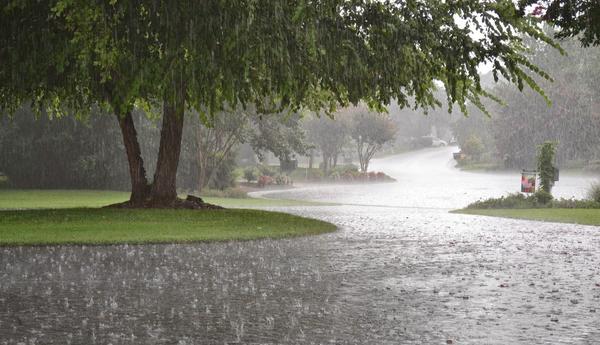
Regarding hydrological variables, July 2024 was wetter than average in northern Europe over much of Fennoscandia, the Baltic states, areas surrounding the North Sea such as Denmark, the Netherlands, northern France and England, as well as Türkiye in the southeast.
However, other regions experienced drier-than-average conditions. In particular, the month was slightly drier than average over Ireland, Scotland, most of Iceland and the Iberian Peninsula, and substantially drier than average across a large region spanning from western Russia southwards including the Balkans and peninsular Italy. Drier-than-average conditions were also seen across western North America, eastern Russia, southern South America, and southern Africa including Madagascar.
Global land-averaged relative humidity shows a decreasing trend over the last 40 years and remained low since the early 2000s. July 2024 was not an exception.

Bütün xəbərlər Facebook səhifəmizdə
























 USD
USD
 EUR
EUR
 GBP
GBP RUB
RUB