


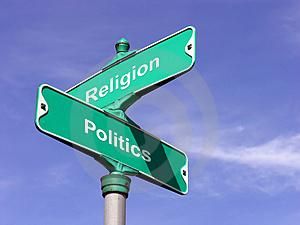
Lately the analysts review the salafism from the political perspective. This draws interest in the light of the intensification of the social-political processes occurring in the Muslim countries. Is there a new power emerging on the political arena? What may be the outcome of the process? There is a need to contemplate on those questions.
Islam and politics
Undeniable is the truth that Islam is a widespread religion. The given process has intensified during the late XX and early XXI century. Interestingly, the ascent of Islam occurs along with growing prominence of the political processes in the Muslim countries. Therefore "politicization of Islam" is the term frequently used by the analysts. What is really happening? Is indeed Islam politicized?
There is a variety of answers by analysts and academicians. In reality on the political scene there are plenty of political parties that commonly recourse to Islamic factor in their ideological concept. Ever growing number of people convert to Islam in the West, yet Islamophobia has invigorated on the social-political level. Those parallels are hardly incidental.
Traditionally, mixing Islam with the politics comprised a special content. State leaders have resorted to it, attempting to secure public order, to establish reconciliation and to forge just development model. For instance, Islamic values had played an eminent role in governance during the Ottoman rule. The situation is quite different at present historical stage.
Presently, there is a prevalent perception within the international community that once Islam is entangled with politics then there is bloodshed and reign of terror. Even the Western media presents Islam in the context of terror. Breivik was the terrorist permeated with Islamophohobia. Guided by hatred he murdered innocent people just because they were Muslim.
Obviously Islam has nothing to do with terror and violence. Truth is though, that certain radical groups perpetrate crimes using the name of Islam, attempting to justify their activity with some Islamic ideology. Therefore a need arises to research some ideological movements that endeavour the synthesis of Islam and political activity in present historical environment. One of those is the salafism.
Some ideological features of the salafism
The ideology was conceived several centuries ago, with Ahmad bin Hanbali and Abdussalam ibn Teyniyya being the founding fathers. It derived from the word "salaf", meaning "predecessor". As a religious current the essence of salafism is puritanic rejection of any novelty in Islam, strictly adhering to directives of the Prophet Mohammad’s lifetime. Salafis are convinced that Islam needs purification. Under "purification" they mean ridding the faith of the post Prophet era novelties and salvation from denominations. In this sense they hold an irreconcilable position on any religious annex contradictory to their views. Intolerance to contrary views has developed in the longstanding salafi ranks. They consider themselves to be absolutely correct and by displaying zero tolerance to different views on Islam they appear more fanatic.
Prejudice against contrary religious views has radicalized the salafi behavior. By rejecting other outlooks they attempt to disseminate the self referred idea of "pure Islam" among the masses.
Any common or shared view is totally unacceptable. All ideas emerging after the induction of religious realities of the historical phase of Islam’s introduction is regarded as deceit. In the meantime they confront the novelties in the religion and totally reject the impact of philosophy.
Those features have presently transformed the salafism into a serious factor. Certain political circles attempt to utilize those features of the salafism in their best interest. As a result opinions are voiced regarding the perilous ideological positioning of salafism on the political plain.
Modern politics and salafism
Until recently the salafis have refrained from acting as a political party. They denounced democracy, taking a polarized political position on any issue. Political career of the "Muslim Brotherhood" has spurred the change in the salafis’ position. Now they yearn for political governance, applying this course of action throughout various countries of the world.
One feature must be emphasized when speaking about political presence of the salafism. Saudi Arabia spends significant amount of funds sponsoring dissemination of the salafism in the world. In their activity salafis are mainly endeavoring to unite radicalism and politics under the term of "wahabism", Al-Qaeda is a testament.
Rumors are that Al-Qaeda is exercising new tactics in Egypt and Syria. In Syria they are gradually aiming for the provinces, trying to enforce their rule. By imposing their local representatives on the ground they try to establish structures suitable to their needs. They have somewhat succeeded. Observers conclude that unlike before, wahabis are not confronting democracy anymore.
So, salafis have gradually shifted into a social-political plain, without proper acknowledgment of their future actions once ascended to power, similar to "Muslim Brotherhood".
Ideological transformation of the salafism troubles the West, while some circles attempt to use it against the very Muslim states.
This matter has gained massive scale. As the Muslim countries develop, so do their prospects of making their voices heard around the world. This raises concern with certain circles. One of the obstruction methods is the increasing the number of political parties that have the Islamic background, but yet display different political standpoint.
On the way to success using the "services" of the salafis, known for their radical and irreconcilable religious views, seems more advantageous. By strengthening the salafism as a political movement an ample ground for sowing intrigue in the Muslim states is emerging.
Then an impression of adherence to democratic values comes into play for every group engaged in politics. Example is the shaping of a democratic image of the "Muslim Brotherhood". However Henry Kissinger has serious doubts about the issue, voicing opinion about the vague direction of political reforms to be conducted in Egypt. He is assured that extreme caution ought to be exercised when dealing with groups with religious affiliation.
This thesis is also applicable to political groups affiliated with Christian faith, since concerns are raised about the alarming scale of fundamentalism permeating the politics. In Russia too such problem is divulging.
The extent of democracy adherence among the salafis clearly stems from their traditional ideological position.
Salafism still rejects contrasting religious views, meaning that politically it is a risk factor. Regardless of the rhetoric, there is a lack of trust in pursuing peaceful and democratic course while conducting concrete politics.
Religion splitters: grave threat for the world
Increase in number of groups that operate disguised under the name of Islam is quite alarming in the context of religion’s fate. As a system of moral-ethical values and social-cultural norms Islam holds great advantages. Number of those converting to Islam around the world is rapidly growing. Aiming to impede the process some endeavour to engage Islam in politics. At a glance seemingly innocent process of Islam’s elevation may transform into an irreversibly negative trend.
The issue is that once Islam and politics converge, personal and collective interests prevail. People adhere to Islam as a system of moral-ethical values and not an isolated political event. Those interested in this warp are clearly known.
Salafism, emerging on the political arena with a democratic image may entail a split in the Islamic world. In the Islamic Ummah the Muslims may have diversity of opinions. However if an extra clause is added to the core of the diversity, that may lead to a belief. This in fact means splitting the Islam from the inside leaving it up against a destructive current of political ambitions.
This matter is ever more urgent in the light of the process dubbed "Arab spring". It is in this context that various radical religious movements aim to acquire political status. They attempt to capitalize on social-psychological hardships emanating from the "Arab spring". Presently, this trend serratedly reveals itself in the countries engulfed by the "Arab spring". This aspect plays a significant role in the idea expressed by H. Kissinger regarding the clear essence of this process.
This process could surely be detrimental to the entire world, since at the present historical stage great responsibility rests with the Islam. It may endow the humanity with peace and prosperity, while existing in harmony with other faiths it may greatly contribute to world order. The fundamental reason is that Islamic world is embracing the stage of dynamic development.
Those conspiring to split Islam are obliterating their own future. The only right way is to keep the religion out of politics. Religion finds its way, however once humans use it for the political purposes the path is narrowed.
The proverb reads: "Beware of cutting off the branch on which you sit". Probably it is also applicable to the society.
Kamal Adigozalov

Sources

Kamran Bokhari. Salafism and Arab Democratization // Stratfor, October 2, 2012.
George Friedman. The Egyptian Election and the Arab Spring // Stratfor, May 29, 2012.
Novruz Məmmədov. Geosiyasətə giriş (İki cilddə. I cild). Bakı, "Azərbaycan" nəşriyyatı, 2011, 576 s.
Henry Kissinger. The limits of universalism // "The New Criterion", June 2012.
Жорж Мальбрюно. Салафиты набирают силу после арабской весны // Inosmi.ru, 11 сентября 2012.
Bütün xəbərlər Facebook səhifəmizdə






























 USD
USD
 EUR
EUR
 GBP
GBP
 RUB
RUB