



Traditionally, ethnic, religious, political-ideological and social-economic factors are recognized as key elements of geopolitical processes. While assessing geopolitical environment in certain region at certain time in the history, the degree of acuteness, the impact and the significance of the aforementioned factors defines the characteristic features of timing and location. In the new millennium, geopolitical processes are characterized by the intensity and inexpectance of the political changes and by the growing trends of globalization and international integration.
Undoubtedly, global and regional integration processes, including globalization are the key trends of modern times. Integration processes are classified based on region, development level, and also political, military, economic, cultural and humanitarian criteria. Already, there are no regions in the world left behind. European Union of the old continent, NAFTA in the North America, MERCOSUR of Latin America, Arab League in Africa and the Middle East, African Union, Shanghai Cooperation Organization and ASEAN to name a few.
One of the noticeable trends is that high level of integration leads to the emergence of common political-economic environment. European |Union is one of those environments where sovereign rights of the member states are observed. Looking back into the history it becomes clear that for the past 50 years there has been a process of harmonization between member states in economic, trade, migration, social, legislative and other fields. Suffice to say that organizationally it had all started with the European Coal and Steel Community in 1951. Economic synchronization was reiterated in the relations between the states by the signing of the Single European Act in 1986. At later stages, from Maastricht to Lisbon all major principles of the Union including security, common foreign policy, currency and lending policy among others were defined.
Once acquainted with the key activity principles of the European Union, concrete distribution of authority among member states becomes obvious. Although large countries (UK, Germany, France, Italy) have their say in the decision making process, the sovereign rights of other member states are respected. Support of the integration processes not only by the states but also by their public is also always observed. This precisely is the feature that made European integration model alluring, thus leading to the increase in the number of the member states. Despite the fact that within the EU itself concerns are voiced about the segregation in the economic field between the small countries, especially among the members of the former socialist block. Domestic markets become somewhat of a victim of the integration processes. However, leading members of the union disregard this factor during the shaping of the currency and lending mechanisms and their subsequent proportional distribution. Many experts attribute this particular factor to the European dimension of the global economic crisis. It’s no coincidence that Greece, Hungary and Baltic states have all accused Brussels and Germany of rejecting their demands regarding the allocation of additional funding from the European Investment Bank and European Central Bank. Nevertheless, European Union may be referred to as a form of integration, relatively based on equality.
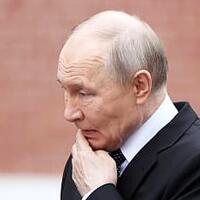
Lately it seems that Russia wants to be more actively engaged in the integration processes. Shifts in Russia’s foreign policy became clearer with Vladimir Putin becoming a president. Initiated by Russia and dubbed as the "deepest integration" in the post soviet space Eurasian Union and Customs Union are conceived to encompass the countries of the region. Presently, Russia, Belarus and Kazakhstan are the members of the Common Economic Space, while intense negotiations are held with other countries of the Central Asia. Armenia was also offered to join the Eurasian Union. It seems that present Russian leadership is guided by the idea of the eminent Russian scholar Lev Gumilyev who once wrote that - "Should Russia rise once again it would only be through Eurasianism".
History of Russia demonstrates that geopolitical theories and doctrines of this country were not always voluntary, at times based on violent aggression. Historically, albeit Tsar Russia and Soviet Union were not completely the bearers of the Eurasianism ideas, they nevertheless had conquered Eurasian space. These outlines are noticeable within the new Russian geopolitical doctrine. Key principles of this doctrine are responsive not only to present Russian capabilities, but also to country’s geopolitical potential. Eurasian Union is the very initiative that serves the cause.
Along with Russian activity in post soviet space the country’s desire to shift the balance of power on the global scale is ever more obvious. Parallel to regional integration Russia is targeting drastic changes in the global geopolitical configuration. Obviously this global giant would not concede to the unipolar model idea. Thus, Russia performs actively within Shanghai Cooperation Organization, Asia Pacific Forum and ASEAN and also aims to establish special bonds with the BRIC countries. Present foreign policy doctrine of Russia is based on the civilization approach. In the new world order, Russia suggests the creation of a new, Euro-Asian civilizations alliance symbolized by the Shanghai Cooperation Organization comprised of such giants as Russia, China and India, as an alternative and balancing instrument to the Western transnational society.

Taking this into account, Russian initiative on the establishment of Eurasian Union may be assessed from various perspectives. Firstly, civilizations approach. Interestingly, diversity of civilizations is one of the key problems in domestic affairs of Russia. Meaning that, foreign policy doctrine based on cooperation of civilizations doesn’t prove to be applicable in the domestic politics. Clear demonstration of that are the events taking place in the Northern Caucasus. Secondly, Russian history shows that country has always lacked the tradition of integration processes based on equality. Thirdly, political processes already overshadow the economic outlines in the Eurasian Union initiative. For instance even within the European Union, the body that has aspired to economic harmony among the members for the past 50 years, there are serious differences.

Therefore, deep integration processes in the globalized world are positive trends that contribute to simplification and streamlining of ties between the states. However, equality is the ultimate precondition in this process. Otherwise integration will most certainly serve the imperial ambitions.
Arastu Habibbayli (PhD)





















 USD
USD
 EUR
EUR
 GBP
GBP
 RUB
RUB