


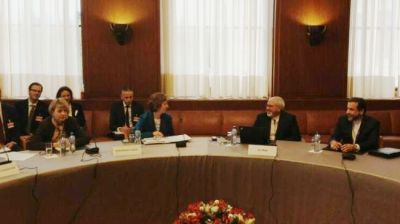
It’s crunch time for the high-stakes international talks that aim to put a verifiable cap on Iran’s nuclear program and ensure that Tehran can’t make a rush to get a nuclear weapon.
The parties to the talks – Iran in one corner, six world powers including the United States in the other – returned to the negotiating table in Vienna Wednesday. They’re likely to carry on marathon negotiations over the next two weeks and right up to a July 20 deadline.
But after years of on-and-off talks – during which Iran has advanced closer to assembling the building blocks of an atomic bomb that it insists it doesn’t want – the two sides remain far apart on key issues. Each side is calling on the other to take the big steps necessary to make a comprehensive agreement possible.
Secretary of State John Kerry said in an opinion piece in The Washington Post earlier this week that Iran can make the right "choices" to prove its nuclear program is peaceful – or "international sanctions will tighten and Iran’s isolation will deepen." Iran’s foreign minister, Mohammad Javad Zarif, took to YouTube Wednesday to tell the world that Iran is ready to take steps to peace but will not "kneel in submission" to world powers to reach an agreement.
The outstanding points are complex, and politics on both sides – particularly in Iran and the US – could still get in the way of a deal. Here are three key elements that the parties have to resolve to get a July 20 accord.
• Uranium enrichment. The breakthrough for Iran in an interim agreement reached in November was recognition of Tehran’s right to enrich uranium. But the trick of a comprehensive agreement will be verifiably limiting the "size and scope" of Iran’s enrichment program, says Daryl Kimball, executive director of the Arms Control Association in Washington.
Here the two sides are playing a numbers game – as in how many centrifuges (the machines used to spin uranium to higher purity) Iran should be allowed to operate.
Currently, Iran has more than 9,000 centrifuges spinning, with about another 10,000 assembled but not operating. But the Obama administration – which wants to limit the "breakout time" for Iran to create enough enriched uranium to deliver what is needed to fuel a nuclear bomb – seems unlikely to go above perhaps 4,000 operating centrifuges.
Bütün xəbərlər Facebook səhifəmizdə
























 USD
USD
 EUR
EUR
 GBP
GBP
 RUB
RUB