


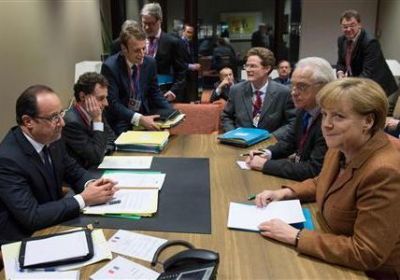
Prospects of a deal on the European Union's long-term budget dimmed on Friday after a fresh compromise proposal offered concessions to France and Poland but ignored British and German demands for deeper overall spending cuts.
European Council President Herman Van Rompuy, chairing a summit of EU leaders to decide on a 2014-2020 budget worth about 1 trillion euros, bowed to pressure from French President Francois Hollande and his Polish counterpart to scale back proposed cuts to farm subsidies and regional development funds.
British and German officials said that made a budget deal this week more remote.
France and Poland respectively are the top recipients of EU Common Agricultural Policy (CAP) subsidies and regional aid money, known in EU jargon as cohesion funds. Jointly, the two spending programmes consume more than two-thirds of the bloc's annual 130 billion euro (105 billion pounds) outlay.
Van Rompuy's latest proposal made no further reduction in the overall budget size, according to a document seen by Reuters.
German Chancellor Angela Merkel told reporters after a first day of mostly one-on-one meetings that positions were still far apart and a deal this week seemed unlikely.
"I believe that we will move forward a little tomorrow but I have my doubts that we will achieve a result," she said. "There is a high likelihood of a second stage."
A British official said it was clear there was a long way to go before leaders agreed on "the right EU budget deal".
The compromise restored about 8 billion euros out of 25 billion earlier cut from farm spending, and more than 10 billion euros out of 25 cut from cohesion funds, while keeping the total reduction from original European Commission blueprint at about 80 billion euros.

Hollande said there had been progress, but it was not yet satisfactory and France wanted more farm payments restored.

To maintain the overall level of cuts, the proposal included deeper reductions to EU funds for research, overseas spending and cross-border telecommunications and energy infrastructure.
Germany wants further cuts of about 30 billion euros, while Britain, Sweden and the Netherlands are seeking an additional reduction of between 50 and 75 billion, officials said.

British demands for cuts to the pay and perks of EU officials - regarded by some as overly generous compared with national civil servants - were ignored in the compromise.
Bütün xəbərlər Facebook səhifəmizdə

























 USD
USD
 EUR
EUR
 GBP
GBP
 RUB
RUB