



Amnesty International revealed today that the US, Russia, Britain and many other European countries have sold much of the weaponary used against recent pro-democracy demonstrators across the Middle East.
The human rights group is urging the US Congress to block a $53 million (£34m) proposed arms sale to Bahrain, where more than 30 people have been killed in the monarchy's crackdown on protesters.
"To the extent that arms transfers are knowingly engaged in and result in the perpetration of crimes against humanity, the transferring state also becomes responsible under international law," said Amnesty advocacy director for the Middle East and North Africa Sanjeev Bery.
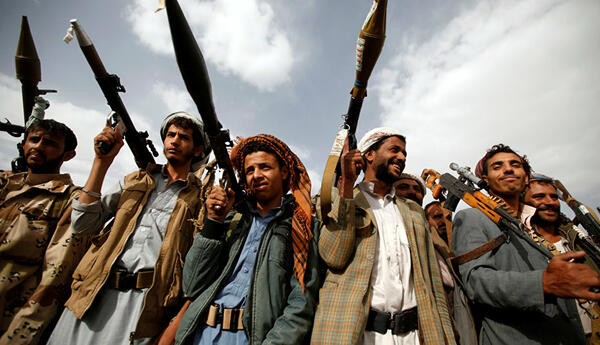
Amnesty has looked at arms transfers since 2005 to Egypt, Libya, Yemen, Syria and Bahrain.
It found that the main suppliers were the US, Britain, Russia, Germany, Italy, France, Austria, Belgium, Bulgaria and the Czech Republic.
The group said that countries must tighten and increase transparency in arms export controls to avoid the risk that weapons will be used to violate human rights.
"It's precisely the wrong signal to send for the Obama administration to be on the verge of sending $53m in weapons to a Bahraini king whose security forces have already been opening fire on peaceful protesters this year," Mr Bery said.
US State Department spokesman Mark Toner insisted, however, that several steps still remained before the US could deliver the weapons to Bahrain.
"We're going to continue to look at all the elements on the ground, including the human rights situation," Mr Toner said, although he didn't address the issue of past sales.
And he declined to say if the deal could be ended by the Bahraini government's failure to implement reforms.
The so-called Arab Spring protests across the region came largely as a surprise to the arms-dealing countries after decades of stagnant and repressive rule.
Amnesty argues that the US and others supplying weapons have long ignored human rights violations under many of the regimes and shouldn't have sold them in the first place.
"The international community needs to know exactly what's being given to whom and exactly how it's being used," Mr Bery said. "If not, the US government should not be in the business of providing the weapons to begin with."
Bütün xəbərlər Facebook səhifəmizdə

























 USD
USD
 EUR
EUR
 GBP
GBP
 RUB
RUB