


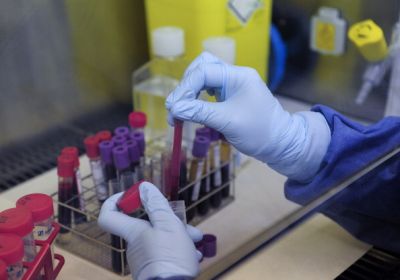
Responding to a major case of research misconduct, federal prosecutors have taken the rare step of filing charges against a scientist after he admitted falsifying data that led to millions in grants and hopes of a breakthrough in AIDS vaccine research.
Investigators say former
Han was indicted last week on four counts of making false statements, each of which carries up to five years in prison. He was set to be arraigned Tuesday in
Han, 57, didn't return a message left at his home in
Experts said the fraud was extraordinary and that charges are rarely brought in such cases. The National Institutes of Health said it's reviewing what impact the case has had on the research it funds.
"It's an important case because it is extremely rare for scientists found to have committed fraud to be held accountable by the actual criminal justice system," said Ivan Oransky, co-founder of Retraction Watch, which tracks research misconduct.
Oransky, a journalist who also has a medical degree, said there have been only a handful of similar prosecutions in the last 30 years.

He said Han's case was "particularly brazen" and noted that charges are rarely brought because the U.S. Office of Research Integrity, which investigates misconduct, doesn't have prosecution authority, and most cases involve smaller amounts of money.
"It's a pretty extraordinary case involving clear, intentional falsification," added Mike Carome, a consumer advocate and director of Public Citizen's Health Research Group. "The wool was pulled over many people's eyes."
Carome noted that Han's misconduct wasted tax dollars and caused researchers to chase a false lead. He said such cases also undermine the public's trust in researchers.
Finding an HIV vaccine remains a top international scientific priority. A 2009 study in
According to the indictment, Han's misconduct caused colleagues to make false statements in a federal grant application and progress reports to NIH.
.jpg)
The NIH paid out $5 million under that grant as of earlier this month.
Han's misconduct dates to when he worked at
Starting in 2008, Cho's team received initial NIH funding for the work. Cho reported soon that his vaccine was causing rabbits to develop antibodies to HIV, which left NIH officials "flabbergasted," according to a criminal complaint against Han.
Bütün xəbərlər Facebook səhifəmizdə































 USD
USD
 EUR
EUR
 GBP
GBP
 RUB
RUB