



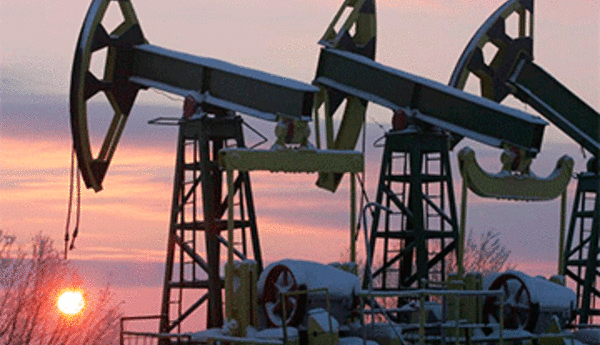
Brent crude fell close to $69 a barrel on Friday, putting it on track for a second weekly decline, as cuts to official selling prices from Saudi Arabia reverberated across the market, SIA reports.
Some analysts said the Saudi cuts to monthly prices for crude it sells to the United States and Asia show it is stepping up its battle for market share a week after refusing to support OPEC output cuts.
"It's been weighing on the market, showing that OPEC is not ready to end its price war," said Commerzbank analyst Eugen Weinberg. "The lower the better seems to be the new paradigm for OPEC."
The January Brent crude contract LCOc1 dropped 53 cents to $69.11 a barrel by 0926 GMT. U.S. crude CLc1 was down 55 cents at $66.26.
A strong dollar, which recently hit two-year highs versus the euro, is another bearish factor for oil prices, as its strength makes dollar-denominated crude more expensive in other currencies.
Investors are looking ahead to the government's non-farm payrolls report for November, due before the U.S. market opens on Friday. Expectations are that the U.S. economy created 230,000 jobs last month.
The battle for market share could intensify next year when Iraq starts to export more oil after Baghdad reached a temporary agreement with the Kurdish regional government.
Adding to supply, Libya is set to restart its largest oilfield, El Sharara, once a pipeline blockage is cleared.
The combined pressure is preventing Brent from rebounding from a near 13-percent plunge last week. Brent hit a five-year low of $63.72 a barrel on Monday after averaging around $110 a barrel from 2011 to 2013.
But some analysts expect oil prices to rebound in the next two years as the market stabilizes following the steep losses, according to a Reuters monthly poll.
Brent will average $82.50 a barrel in 2015 and its premium to U.S. crude CL-LCO1=R will narrow to $4.50 a barrel, the poll showed.
The price plunge may put global oil and gas exploration projects worth more than $150 billion on hold next year, potentially curbing supplies by the end of the decade.

Bütün xəbərlər Facebook səhifəmizdə





















 USD
USD
 EUR
EUR
 GBP
GBP
 RUB
RUB