


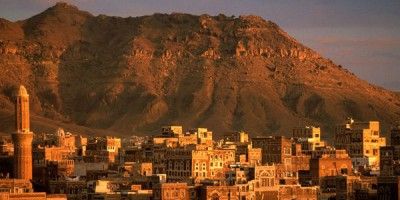
Although the world`s attention is focused on current developments in Egypt and Syria, what is going on in Yemen is also of profound importance. The present situation in Yemen, which is considered a new hotbed of international terrorism, is potentially a source of more serious threat to the region and international security.
The US Department of State closed 19 diplomatic missions in the Middle East and Africa on August 4, 2013, and withdrew American citizens from Yemen. Canada, France and Great Britain took similar security measures. This came after the United States intercepted electronic communications in which the head of Al Qaeda ordered the leader of the group’s affiliate in Yemen to carry out terrorist attacks. The intercepted conversations between Ayman al-Zawahri, who succeeded Osama bin Laden as the head of the global terrorist group, and Nasser al-Wuhayshi, the head of the Yemen-based Al Qaeda in the Arabian Peninsula, revealed the terrorists` plans to attack oil facilities and foreign diplomatic missions in Yemen. According to some sources, Yemeni President Abd Rabbuh Mansur Hadi warned the White house – as early as during his visit to Washington on August 2 - about possible terrorist attacks against the US diplomatic missions in the region. Such heightened alert issued by Washington testifies to seriousness of the threat.
Why Yemen?
In December of 2009, the United States, which believed it already came close to defeating Al Qaeda, was forced to focus its attention on Yemen after a Nigerian terrorist attempted to explode an airliner arriving in the US city of Detroit from Amsterdam in the Netherlands. This meant that Yemen was becoming a new stronghold of terrorists.
Experts believe Yemen is Al Qaeda`s third main base after Afghanistan and Pakistan. And Al Qaeda`s links with Yemen prove that these fears are well-founded. Known for their conservative religious views, Yemenites fought against the Soviet troops in Afghanistan in the 1980s, and then came back. Yemen is where Al Qaeda carried out its first terrorist attacks against US facilities, including the bombing of a hotel in Aden in 1992 and the killing of American tourists in 1994. In 2000, Al Qaeda carried out a suicide attack against the United States Navy guided-missile destroyer USS Cole while it was harbored and being refueled in the Yemen port of Aden. Then came an explosion that damaged French oil tanker Limburg off the coast of Yemen. The country – namely Hadramaut region in its south – is also home to the family of Al Qaeda`s killed leader Osama bin Laden.
The reasons why terrorists won strongholds in Yemen lie in the situation in the country. Yemen`s population consists primarily of two principal Islamic religious groups, with 55% being Sunni and 45% Shiite (Zaydi). But the major factor influencing political processes in the country is relationship among local tribes, rather than among confessions. Although the West described the overthrow in 2011 of Yemeni President Ali Akbar Salehi as "a vivid example of the Arab spring'', this, in fact, was a result of power struggle within the local Hashid tribal federation. So how well any government in Yemen manages to keep the situation in the country under control depends on how much support it gets from local tribes.
One of the main factors that weaken the central government in Yemen is separatism widely spread in the country`s north and south. Yemeni unification took place on 22 May 1990, when North Yemen was united with South Yemen, forming the Republic of Yemen. The north`s taking political and economic power unleashed separatist movement in the country`s south in 1994. The movement, which demanded the establishment of a new state in the country`s south, is still in conflict with the central government. Experts believe the Salehi government`s resorting to radical Islamist militants to suppress the rebellion as early as 1994 was one of the prime factors that strengthened terrorists` position in the region.
In the country`s north, on the border with Saudi Arabia, Huti tribe of Zaydi rose in rebellion in 2004. The sides reached truce in 2010, but, nevertheless, they still retrain their independence claims. The Yemeni government is accusing Iran of financing and arming the rebels. Yemen`s being one of the poorest Arab countries is what helps terrorists gain support of the population`s poor strata. With its economy having fallen into recession and oil resources running out, Yemen is hit by poverty and unemployment. Yemen`s high population growth rate also causes concern as its 25 million population is forecast to double in the next 20 years. All these factors paved the way for Al Qaeda to have got important stronghold in the south of Yemen.
The US`s fight against terrorists in Yemen is ineffective
Located on the south of the Arabian peninsula, Yemen is of crucial geostrategic importance. Yemen controls the Bab-el-Mandeb, a strait connecting the Red Sea to the Indian Ocean and pumping an estimated of 3.5 million barrels of oil per day to Europe and America. Given Yemen`s geographic closeness with the Persian Gulf states, particularly Saudi Arabia, there is a high probability that the processes taking place in Yemen will influence what happens in other countries. For Al Qaeda, Yemen is a crucial transit point for setting up new bases, freely recruiting, training, and deploying terrorists from Northern Africa to Afghanistan and in the opposite direction.
Carrying out drone strikes form airbases in Saudi Arabia and Djibouti is now the United States` main method of fighting against Al Qaeda terrorists in Yemen. The US has carried out 75 drone attacks since 2009, which claimed more than 600 lives. On the other side, Washington has allocated a total of $600 million to the Yemeni government to assist its army building and other efforts.
And drones were used by the US military after news emerged about possible terrorist attacks in Yemen. The Yemeni government said several terrorists were killed, and a terrorist attack was prevented as a result. However, many experts believe these tactics of the US are doomed to failure just like in Afghanistan and Pakistan, and say terrorists enjoy more and more support instead. Members of Al Qaeda`s Yemen-based organization are Yemenites, and not foreigners. So every terrorist killed is considered a representative of a local tribe rather than a terrorist. On the other hand, it is mostly civilians who are killed in rocket attacks. This seriously concerns local tribes, prompting them to support terrorists, which helps them increase their numbers.
Pressed by the US in Afghanistan and Pakistan, terrorists regroup in countries like Yemen where central government is weak. And they are helped by Arab Spring-caused chaos and lack of power. Latest developments in Syria show that powers interested in ousting a government in any country are using extremists to fulfill their goals. But extremists and terrorists then become a serious and unconquerable factor.
Washington`s closing 19 diplomatic missions over security concerns testifies to seriousness of the threat posed by terrorists in Yemen and other countries. Although terrorist attacks were prevented, the US and its allies are not insured against new ones. Short-term measures do not ensure long-term interests, and, in some cases, cause side effects. What`s obvious is that despite the US Administration`s statements about the annihilation of Al-Qaeda and low threat of terrorism, a complete win over terrorism is still far.
Elmar Huseynov

Bütün xəbərlər Facebook səhifəmizdə

































 USD
USD
 EUR
EUR
 GBP
GBP
 RUB
RUB