


Historically the presence of one nation`s military on the other`s soil has been a sign of political dominance. Great empires always had their military force in the occupied places and also outside their own territory for ensuring their economic interests. At the height of the Roman Empire, the Romans had 37 major military bases scattered around their dominions from Great Britain to Egypt. These bases served as strongholds and outposts for watching enemy movements during wars, as well as for ensuring security on trade routes.
The Cold War saw the two conflicting blocks – the North Atlantic Treaty Organization and the USSR - garrison their allies in different regions worldwide. The fall of the Soviet Union marked the emergence of a new geopolitical situation, where the geography and even mission of military bases changed. Last years` events demonstrate that military bases are now used for offensive rather than defensive tactics.
Most of functions of old military bases can now be performed by satellite surveillancetechnologies, electronic commerce and complex mechanisms of financial operations. With mankind having entered a nuclear era, the possibility of superpowers` carrying out war actions directly against each other is equal to zero. The reason is that nuclear weapons mean the end of the world. Superpowers now shifted to information and non-contact warfare. Given all this, there is no urgent need for such military strongholds.
And the third millennium saw the situation change dramatically influenced by new geo-political circumstances. Today 95 per cent of military bases worldwide belong to the United States of America. Military bases of Germany, Italy and Japan, which they had last century, were shut down, while Great Britain, France and Russia had the number of their bases reduced. The U.S.` dominance reflects a new balance of power.
First military bases of the United States opened after the Spanish–American War of 1898, which strengthened the U.S.` hand in the Caribbean and Pacific. In general the war marked American entry into world affairs, and was of critical importance to present-day global military network of the United States. The war resulted in the signing of the Treaty of Paris in 1898, which saw Spain surrender control of Cuba, Puerto Rico, Guam, and the Philippines to the United States, where Americans created their main military bases. Strategic position in the Pacific Ocean, in the Philippines on the one hand, and in Guam on the other, allowed the USA gain control of main Chinese and Japanese sea shipping routes. The bases in Cuba and Puerto Rico were aimed at creating a defensive line in the Caribbean Sea.
The United States benefited skillfully from the WWII as well. In the course of the war the U.S. achieved consent of Great Britain and France, its anti-Hitler allies, to use their ports and build military bases on their soil. But after the war the U.S. did not pull its military contingent out of Great Britain, Western Germany, Italy, France, Belgium, Iceland, Norway, Japan and South Korea. Until 1960, the United States entered eight multilateral treaties with 42 countries and bilateral agreements with 30 states with the aim of deploying its military there. In return, America undertook commitments to help these countries preserve their independence, defend from the Communist regime and counteract Germany`s and Japan`s revenge.
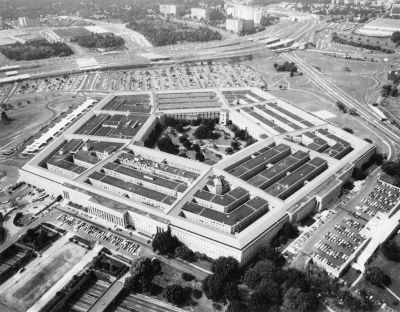
The WWII saw military bases become a constant factor in the United States ` foreign policy. Today the U.S. has more than 700 military bases and facilities in over 130 countries worldwide. This includes military bases which cover many tens of hectares, small aerodromes with the military contingent numbering from 20 to 200 people, installations, coordination facilities, and research centers. In addition, 11 large ships of the U.S. Navy also function as floating military bases that can be moved around the world for military operations.
One of the important factors contributing to extending the geography of U.S. military bases abroad is their commercial value. Apart from businesses manufacturing weapons and militarytechnologies and equipment, military bases are a key source of revenue for civil industrial sectors.
According to calculations of American researchers, sustainability of a number of sectors of the American economy is dependent on agreements to build military bases, and weapon and ammunition supply. Halliburton can be singled out as the most important of these companies (Kellogg Brown & Root, and others), which are fulfilling orders to build bases, ensure provision and meet demands of the military contingent. Under two Bushs, a number of figures at the U.S. Administration and government were shareholders or members of the Board of Directors of Halliburton, which caused widespread media reaction.
In general, a geo-political study of the geographical location of U.S. military bases reveals several interesting points. The United States` largest military bases are located in the countries that have "special relations" with Washington. These are Great Britain, Israel, the Republic of Korea, and Germany and Japan, which - helped by the U.S - have been recovering after their defeat in the WWII. But what`s interesting is that it`s not Great Britain where the United States have the largest number of military bases in Europe. It`s Germany. And, in Asia, it`s not South Korea. It`s Japan. The U.S. has 205 military facilities in Germany with a total of more than 250,000-strong force. One can draw a conclusion that the United States doesn`t completely trust Germany - which it came face to face with two times during the world wars, and which it now calls an ally – and, therefore, keeps it under constant observation.
Secondly, the placement of U.S. military bases is expanding continually thanks to military operations and hot spots. The Korean war, the Philippine Liberation Movement, the Kuwait, Balkans, Iraq, Afghanistan wars resulted in the opening of U.S. military bases in the region and in these countries. And September 11 events marked the entry of American military force in the post-Soviet area (Uzbekistan and Kyrgyzstan), which previously seemed impossible. That is, every war must have the creation of American military bases as one of its results. Tactically, a war or a conflict play the role of a stimulant to expanding the U.S.` military influence.
Another point is that the American military bases are mostly located in energy-rich regions, on oil and trade routes, and in transport corridors. America has military bases in all oil-rich regions throughout the world. And a conflict is a tool for entering these regions. For example, after the Kuwait war the United States entered the Persian Gulf basin (Bahrain, Qatar, and Oman); the Iraq war saw Americans deploy its military force in other countries of the region, making it home to the largest number of American military bases. The American military also controls all sea routes (Panama, Djibouti, Malaysia, Oman, etc). In this context, one of the key points is that U.S. military bases are directed towards geoeconomic centers.
The largest portion of U.S. military bases is located in the Western Europe. Although the United States is entering deeper into Europe and increasing its contingent around the Persian Gulf, Washington`s main focus is China`s assess to sea. The United States has military bases on all sea routes of China, which will be its major rival on a global scale in a new millennium. Add to this Taiwan, a hotbed of conflict, and the United State`s being at an advantage becomes clear.

The "Asian axis" is now a priority in Washington`s foreign policy. The Pacific Ocean can be called "the U.S.` sea", as a whole, as it is the only dominant in this basin. In addition, Americans have military bases in Australia and Coconut Island. The United States even returned to Vietnam, its former enemy, with which it signed a military cooperation agreement in 2011. They are currently holding negotiations to give American ships greater access to Vietnamese ports. New military bases are also being created in Indonesia, Malaysia and Brunei. Some 200 American military bases have emerged around China in the last 10 years. However, it should be noted that the United States now gives preference to small mobile military bases now as "lily pads" These are small, secretive, inaccessible facilities with limited numbers of troops, spartan amenities, and prepositioned weaponry and supplies.

Therefore, given a new geopolitical situation, one can suppose that despite having different economic interests, it is the United States` geopolitical ambitions that influence the placement of its military bases on a global scale. And hot spots around the world and the fact there is a synchronous dependence among these military bases make the situation more complicated. It looks like there will be no peace and tranquility in the world until the American military base network envelops the globe.
Arastu Habibbayli (PhD)

























 USD
USD
 EUR
EUR
 GBP
GBP
 RUB
RUB