


How does quality content attract audience attention, build trust, and strengthen an
organization’s reputation?
In the digital world, social media platforms are not merely channels for sharing information; they
are important communication environments where lasting relationships between organizations
and their audiences are established. However, simply having social media accounts and
publishing content regularly is not enough to ensure effective communication. The key is to
understand what type of content is being presented to the audience, how valuable it is, and how it
contributes to achieving the organization’s objectives.
The effectiveness of social media largely depends on the quality and relevance of content and
how well it aligns with audience interests. This is why Content Strategy plays a particularly
important role in modern PR and SMM activities.
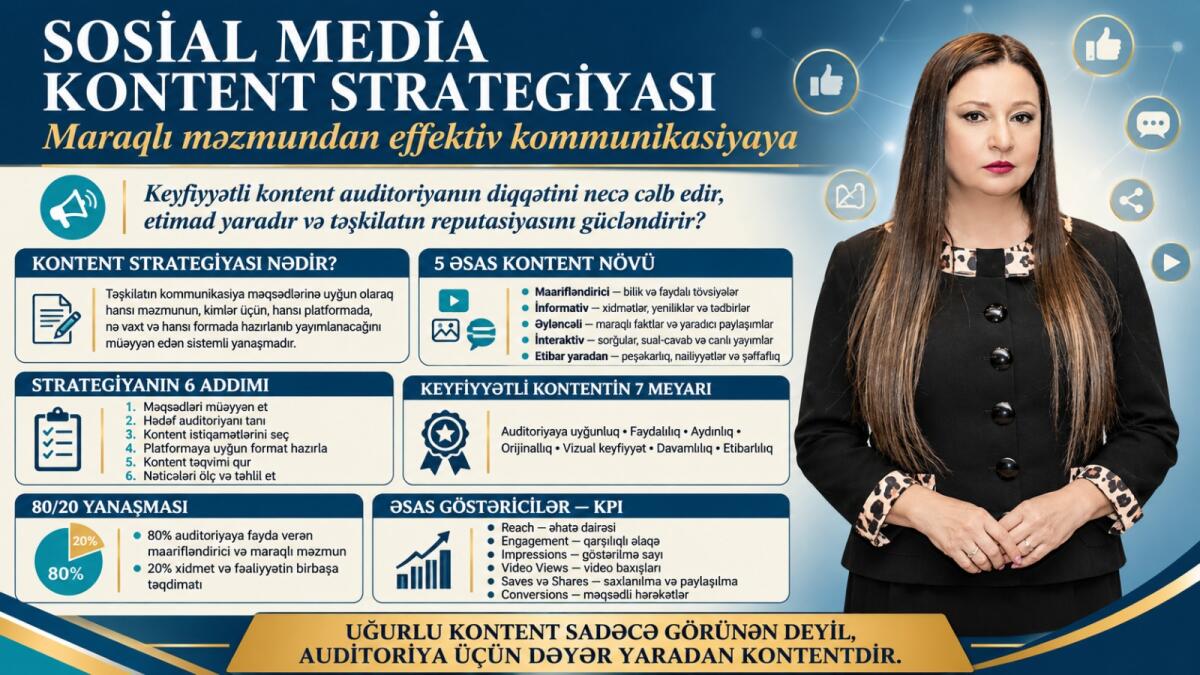
A content strategy is a systematic approach that defines what content should be created, for
whom, on which platform, when, and in what format, in accordance with an organization’s
communication objectives.
1. What Is Social Media Content?
Social Media Content refers to all types of materials presented to audiences across social media
platforms. These include:
Text-based and informational posts;
Photographs and graphic designs;
Infographics;
Videos and Reels;
Live streams;
Polls and interactive posts;
Stories;
User-Generated Content (UGC);
Educational articles and interviews.
The primary purpose of content is not simply to deliver information. It should capture the
audience’s attention, generate interest, provide value, and strengthen interaction between the
organization and its audience.
For example, a hospital’s social media account should offer more than just doctors’ appointment
schedules and lists of medical services. It should also feature educational articles about health,
interviews with doctors, preventive healthcare recommendations, and videos about modern
medical technologies.
2. Main Types of Content
An effective social media strategy is based on the appropriate and purposeful use of different
content formats.
2.1. Educational Content
The purpose of educational content is to provide audiences with new knowledge, explain specific
topics, and share useful information.
Examples include:
Articles about healthy lifestyles;
Information on disease prevention;
Doctors’ recommendations;
Materials highlighting the importance of medical examinations;
Informative videos explaining various health conditions.
This type of content is particularly important for healthcare institutions because it helps establish
their image not only as providers of medical services but also as organizations committed to
educating the public.
2.2. Informational Content
This type of content is designed to inform audiences about an organization’s activities, services,
developments, and events.
Examples include:
Information about new medical equipment;
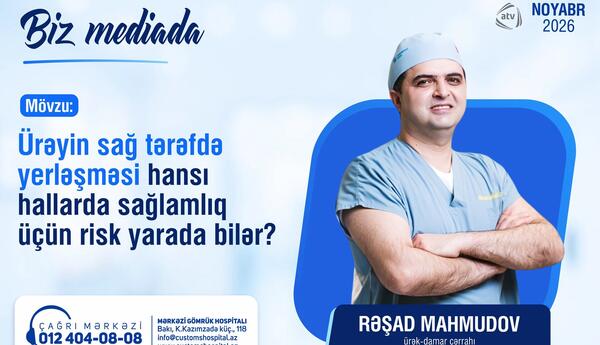
Doctors’ television appearances;
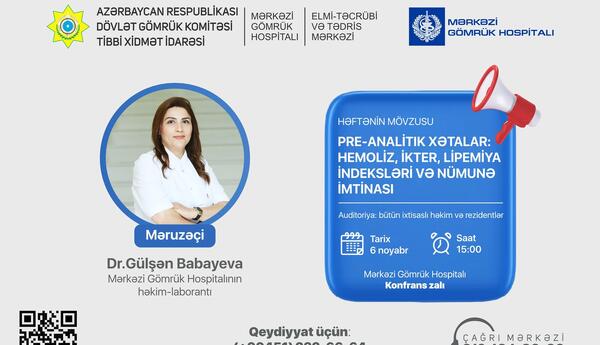
Scientific and practical conferences;
Training sessions and seminars;
Introductions to new services;
Organizational updates.
Informational content increases public awareness of an organization’s activities.
2.3. Entertaining Content
The purpose of entertaining content is to attract audience attention, create an emotional
connection, and make a social media page more dynamic.
Examples include:
Interesting facts;
Themed quizzes;
Short health-related tests;
Creative posts dedicated to holidays and special occasions.
In healthcare, entertaining content must always be developed within appropriate ethical and
professional boundaries.
2.4. Interactive Content
Interactive content transforms audiences from passive viewers into active participants in
communication.
Examples include:
Polls;
Question-and-answer sessions;
Quizzes and tests;
Live streams;
Responses to followers’ questions.
For example, conducting a poll on the topic “How much do you know about preventive health
screenings?” can help an organization better understand its audience’s interests.
2.5. Trust-Building Content
The main purpose of this type of content is to demonstrate an organization’s professionalism,
transparency, and reliability.
Examples include:
Doctors’ professional activities;
Scientific achievements;
Approved information about successful medical outcomes;
International certificates and accreditations;
Participation in medical conferences;
Patient reviews and stories, provided that confidentiality requirements are respected and
appropriate consent is obtained.
This type of content contributes to building and strengthening an organization’s reputation.
3. What Is a Content Strategy and Why Is It Important?
A content strategy is a planned communication approach based on clearly defined objectives,
rather than random or uncoordinated publications.
It provides direction for an organization’s social media activities and ensures that all publications
serve a unified communication purpose.
A well-developed content strategy helps to:
Increase brand awareness;
Expand audience reach;
Strengthen interaction with followers (Engagement);
Build audience trust;
Strengthen organizational reputation;
Increase website traffic and inquiries;
Achieve the organization’s communication objectives.
The key principle is that every publication must have a specific purpose.
4. How to Develop an Effective Content Strategy
Developing a content strategy involves several consecutive stages.
Stage One — Defining Objectives
First, the objectives of social media activities must be clearly identified.
For example:
Increasing organizational awareness;
Educating the audience;
Providing information about new services;
Strengthening audience engagement;
Enhancing reputation;
Increasing traffic to the website and other communication channels.
Objectives should be specific and measurable.
Stage Two — Identifying the Target Audience
Before creating content, it is essential to determine who the content is intended for.
Target Audience refers to the group of people an organization primarily focuses on in its
communication activities.
When identifying the target audience, the following factors should be examined:
Age groups;
Interests;
Needs;
Behavioral characteristics;
Social media platforms they use;
Information-seeking habits.
For example, the audience of a healthcare institution may include people of different age groups,
patients, healthcare professionals, employees, and their family members.
Since each audience group has different information needs, the language, presentation format,
and topics of the content should be selected accordingly.
Stage Three — Selecting Content Pillars
The main content themes should be identified in accordance with the organization’s activities.
For a healthcare institution, these may include:
1. Health and medical education;
2. Doctors’ professional activities;
3. Medical services and technologies;
4. Scientific and educational activities;
5. Patient information and awareness;
6. The organization’s social and public activities;
7. Commemorative occasions and international healthcare awareness days.
These content pillars help maintain a balanced and diverse social media presence.
Stage Four — Creating Content for Different Platforms
Each social media platform has its own audience, characteristics, and preferred content formats.
For example:
Facebook — detailed information, news, articles, photo albums, and posts about events.
Instagram — visual content, Reels, Stories, infographics, and short educational videos.
TikTok — short, dynamic videos presented in simple and accessible language.
YouTube — in-depth interviews, doctors’ presentations, educational videos, and recordings of
events.
LinkedIn — professional achievements, institutional updates, scientific activities, and corporate
communications.
The same information can be presented in different formats across various platforms. This
approach is known as Content Repurposing — adapting existing content to different formats
and platforms.
Stage Five — Developing a Content Calendar
A Content Calendar is a practical working tool that helps organizations plan their social media
publications in advance.
A content calendar typically includes:
Publication date;
Topic and headline;
Content type;
Platform for publication;
Visual materials;
Person responsible for preparing the text;
Purpose of the publication;
Performance evaluation.
A content calendar organizes the PR team’s workflow, helps use time efficiently, and prevents
important topics from being overlooked.
5. Key Characteristics of Quality Content
Attractive design alone is not enough to make content successful. Its substance must meet certain
quality standards.
1. Audience Relevance
Content should address the interests and needs of the target audience.
2. Value and Usefulness
Every publication should provide readers with new information, knowledge, or practical value.
3. Clarity and Simplicity
Complex information should be presented in clear and understandable language. In particular,
professional medical terminology should be simplified whenever its use is not essential.
4. Originality
Content should reflect the organization’s own activities, values, and distinctive characteristics.
5. Visual Quality
Photographs, videos, colors, and graphic elements should follow a consistent visual identity.
6. Consistency
Publications should be shared regularly and in accordance with an established communication
plan.
7. Credibility
Information must be accurate, verified, and based on reliable sources.
6. What Are Reach and Engagement?
Two important metrics are used to evaluate the effectiveness of social media content.
Reach — Audience Reach
Reach indicates the number of unique users who have seen a particular publication.
For example, if an educational video reaches 10,000 different users, its reach is 10,000 people.
Engagement — Audience Engagement
Engagement refers to the ways in which audiences interact with a publication.
These interactions include:
Likes;
Comments;
Shares;
Saves;
Other interactive responses.
Reach shows how many people the content has reached, while Engagement indicates how the
audience has responded to it.
High reach does not necessarily mean high engagement. Similarly, a large number of likes does
not automatically indicate that an organization has fully achieved its communication objectives.
Therefore, PR professionals should analyze these metrics together.
7. The 80/20 Principle in Content Marketing
One of the commonly used approaches in content strategy is the 80/20 principle.
According to this approach:
Approximately 80% of the content should consist of useful, educational, informative, and
engaging material that provides value to the audience.
Around 20% should focus directly on presenting the organization’s services, products,
and activities.
For example, most of the publications on a hospital’s social media pages may focus on health
topics, doctors’ recommendations, and disease prevention. A smaller proportion may be
dedicated to presenting medical services and new opportunities offered by the institution.
This principle is not an absolute rule but rather a practical approach to maintaining a balanced
content mix.
8. Call to Action — Encouraging the Audience to Take
Action
CTA (Call to Action) is a prompt that encourages users to take a specific action.
Including a CTA at the end of social media publications helps guide the audience towards the
next step.
Examples include:
Visit our official website for more information.
Share this article with your friends.
Leave your questions about this topic in the comments.
Contact our Call Center to book a doctor's appointment.
Watch our educational video.
The call to action should always align with the communication objective of the publication.
9. A Practical Content Strategy for Healthcare Institutions
A content strategy plays a particularly important role in the social media activities of healthcare
institutions in terms of public education, reputation management, and institutional
communication.
For example, the following content pillars can be applied to the social media activities of the
Central Customs Hospital:
Educational Content: Videos featuring doctors discussing cardiovascular diseases, diabetes,
allergies, and preventive medical examinations.
Professional Content: Doctors’ participation in international conferences, scientific articles,
certificates, and professional achievements.
Institutional Content: The hospital’s medical services, modern equipment, new technologies,
and the activities of its departments.
Educational and Scientific Content: Seminars, symposia, residents’ activities, and scientific
and practical events.
Interactive Content: Health-related questions and answers, polls, and live sessions with doctors.
Reputation-Building Content: Quality standards, international cooperation, medical
achievements, and projects of public importance.
This approach enables social media pages to become more than just platforms for sharing news.
They can develop into comprehensive communication channels that provide reliable healthcare
information.
10. How to Measure the Results of a Content Strategy
The effectiveness of published content should be evaluated regularly.
For this purpose, organizations use KPIs (Key Performance Indicators).
Metric What It Measures
Reach Number of unique users reached by a publication
Impressions Total number of times a publication is displayed
Engagement Rate Level of audience interaction
Video Views Number of video views
Saves Number of times a publication is saved
Shares Number of times a publication is shared
Link Clicks Number of clicks on links
Follower Growth Increase in the number of followers
Conversions Number of desired actions completed
Analyzing these metrics helps identify which topics, formats, and communication approaches are
the most effective.
However, results should not be evaluated solely through numerical indicators. Audience
feedback, questions, attitudes, and the impact of communication activities on the organization’s
reputation should also be taken into consideration.
Successful communication on social media is not built through random publications but through
a well-planned content strategy.
Quality content attracts audience attention, provides useful information, strengthens interaction,
and helps build trust in the organization.
When developing content, a modern PR professional should ask not only, “What should we
publish?” but also: “Who is this publication intended for?”, “What problem does it help
address?”, and “How does it contribute to the organization’s communication objectives?”
Remember: Successful social media content is not simply content that gets noticed; it is
content that creates value for the audience.
Dilara Zamanova
PR Specialist
Central Customs Hospital
Bütün xəbərlər Facebook səhifəmizdə






















 USD

 EUR

 GBP
 RUB