


Social Media Monitoring and Listening – Understanding Public Opinion, Analysing Competitors and Building an Effective Communication Strategy
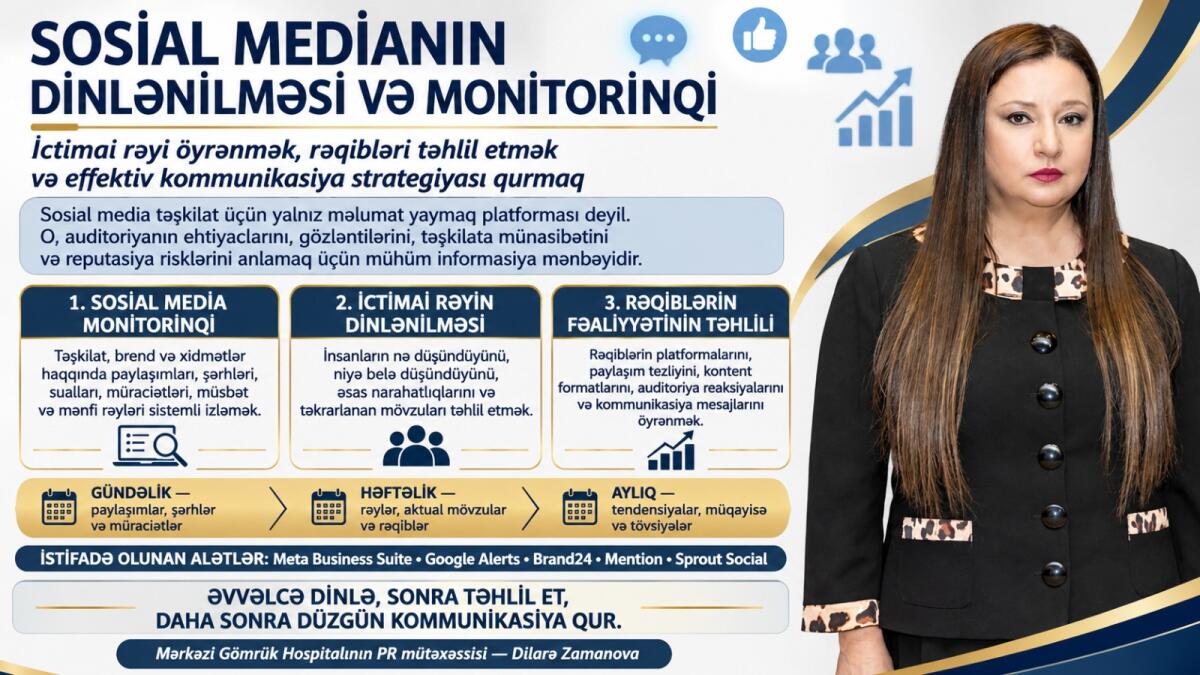
Tracking Public Opinion on Social Media, Social Media Monitoring, Competitive Environment Analysis and Competitor Intelligence
In the digital world, social media platforms are not merely communication channels through which organisations share their own information. They are also valuable sources of insight for understanding public opinion, identifying audience needs, evaluating perceptions of a brand and analysing competitors’ activities.
On digital platforms such as Facebook, Instagram, LinkedIn, TikTok, YouTube and others, people share their opinions on various topics, ask questions, exchange experiences and express their views about organisations every day.
This information is particularly important for PR professionals. Successful communication depends not only on what an organisation says, but also on what the public thinks, what it expects and what challenges it faces.
In this context, three important concepts play a significant role in social media strategy:
- Social Media Monitoring – systematically tracking social media activity.
- Social Listening – analysing public opinion and understanding audience perceptions on social media.
- Competitive Intelligence – gathering and analysing information about competitors through publicly available sources.
1. What Is Social Media Monitoring?
Social Media Monitoring is the systematic tracking of information, comments, posts and user reactions published on social media platforms about an organisation, brand, product, service or specific topic.
Simply put, social media monitoring means observing what people are saying about an organisation online and how they respond to its activities.
During the monitoring process, PR professionals track:
- Mentions of the organisation's name across social media platforms;
- Comments on posts;
- Questions and enquiries from users;
- Positive and negative reviews;
- Discussions about the organisation's services;
- Posts shared by media representatives;
- Public reactions to specific topics and keywords.
2. What Is Social Listening?
Social Listening is the in-depth analysis of information collected from social media platforms to identify audience perceptions, needs, expectations and behavioural trends.
While monitoring shows what people are saying, Social Listening helps organisations understand why people think that way and what those opinions mean for the organisation.
During the Social Listening process, PR professionals seek answers to the following questions:
- What does the public think about the organisation?
- Which topics are discussed most frequently?
- What are the audience's main concerns?
- Which services are people most interested in?
- Which issues repeatedly emerge in public discussions?
- What trends could potentially affect the organisation's reputation?
- What changes are needed in the communication strategy?
3. What Is the Difference Between Social Listening and Social Media Monitoring?
Although these two concepts are closely related, their objectives and methods of application are different.
|
Social Media Monitoring |
Social Listening |
|
Tracks posts and comments. |
Analyses the collected information. |
|
Identifies what people are saying. |
Explores why people hold particular opinions. |
|
Focuses primarily on observation and immediate response. |
Supports strategic decision-making. |
|
Identifies complaints and enquiries. |
Examines the causes of complaints and identifies broader trends. |
|
Provides an overview of the current situation. |
Helps determine future communication priorities. |
Monitoring is about observing, while Social Listening is about analysing observed information and drawing meaningful conclusions from it.
4. How Can Social Media Monitoring and Listening Be Integrated into Daily Work?
To ensure effectiveness, monitoring should not be conducted occasionally but should become a systematic part of an organisation's communication activities.
PR professionals can develop daily, weekly and monthly monitoring plans.
Daily Activities
- Tracking new posts and mentions about the organisation.
- Checking comments and direct messages.
- Responding to users' questions.
- Identifying negative feedback and potential reputational risks.
- Recording emerging and relevant topics.
Weekly Activities
- Analysing positive and negative feedback.
- Identifying the most frequently discussed topics.
- Exploring audience interests.
- Reviewing competitors' social media activities.
- Developing new content ideas.
Monthly Activities
- Summarising monitoring results.
- Evaluating changes in audience perceptions.
- Identifying reputational trends.
- Comparing competitors' communication strategies.
- Preparing recommendations for the following month.
This approach transforms social media data from information that is simply observed on a daily basis into a valuable tool for strategic decision-making.
5. Competitive Intelligence – Analysing Competitors' Activities
Competitive Intelligence refers to the collection and analysis of information about competitors, their products and services, communication activities and market positions, using publicly available and legally accessible sources.
In PR and marketing, this approach helps organisations develop their own communication strategies more effectively.
When analysing competitors' social media activities, PR professionals should pay attention to the following aspects:
Which social media platforms do they use? How many posts do they publish each week? Which topics attract the most attention? How do they use videos, posters, Reels and carousel formats? How do they interact with their audiences? Which posts receive the highest numbers of likes, comments and shares? How are the communication messages of their advertising campaigns structured? How do they feature experts and specialists in their content?
6. Technologies and Tools Used for Social Media Monitoring
Since manually tracking large volumes of social media information can be challenging, various digital tools are used to facilitate this process.
Meta Business Suite
Used to manage Facebook and Instagram pages, monitor comments and messages, and evaluate the performance of published content.
Google Alerts
Allows users to receive notifications about newly published online content related to selected keywords, organisation names and brands.
Brand24
Used to monitor and analyse online discussions about brands and specific topics across the internet and social media platforms.
Mention
Helps track mentions of brand names, products and selected keywords across various digital sources.
Sprout Social
A platform designed for managing social media accounts, engaging with audiences, monitoring online activity and preparing analytical reports.
When selecting a tool, organisations should consider its cost, functionality, platform coverage, reporting capabilities and suitability for their specific needs.
7. How to Choose the Right Social Media Monitoring Tool
Every organisation has different communication objectives and resources. Therefore, using the same social media monitoring tool for every organisation may not always be appropriate.
The following criteria should be considered when selecting a technology:
- Purpose: What problem or task should the tool address?
- Functionality: Does it provide monitoring, analytics and reporting capabilities?
- Platform Compatibility: Which social media platforms does it cover?
- Ease of Use: Can employees use the tool easily and efficiently?
- Cost: Does the subscription fee fit the organisation's budget?
- Security: Does it ensure data protection and respect users' rights?
- Reporting: Does it allow results to be compared and presented effectively?
For smaller organisations, tools such as Meta Business Suite and Google Alerts may be sufficient at the initial stage. Organisations with more extensive monitoring requirements may consider using additional specialised platforms.
8. Sentiment Analysis – Analysing Public Sentiment
Sentiment Analysis is the process of identifying the emotional tone and orientation of texts and reviews published on social media platforms.
Based on this analysis, user opinions are generally classified into three categories:
- Positive Sentiment – positive attitudes and opinions.
- Negative Sentiment – negative attitudes and opinions.
- Neutral Sentiment – neutral attitudes and opinions.
However, it is important to recognise that automated sentiment analysis does not always produce accurate results. Irony, context, the linguistic characteristics of the Azerbaijani language and complex expressions can affect the accuracy of algorithms.
Therefore, significant analytical findings should also be reviewed and verified by a human specialist.
9. Improving Communication Strategies Based on Social Listening Insights
The primary purpose of Social Listening is not simply to collect information, but to use that information to make informed decisions.
Based on the findings, PR professionals can:
- Identify new topics for educational and awareness-raising content.
- Develop content that addresses audience questions.
- Strengthen communication about the organisation's services.
- Identify potential reputational risks at an early stage.
- Improve communication messages.
- Strengthen relationships with the media and the public.
- Enhance the organisation's digital reputation.
Social Listening is particularly important in the healthcare sector, as it helps identify priority areas for public health education and medical awareness campaigns.
At the same time, patient confidentiality and the privacy of personal and medical information must be protected, and information obtained from public discussions must be used responsibly.
10. A Practical Social Media Monitoring Report for PR Professionals
The results of social media monitoring and listening should be regularly presented in the form of analytical reports.
A sample monthly report may include the following indicators:
|
Indicator |
Area of Analysis |
|
Brand Mentions |
Number of times the organisation is mentioned |
|
Positive Mentions |
Positive references to the organisation |
|
Negative Mentions |
Negative references to the organisation |
|
Neutral Mentions |
Neutral references to the organisation |
|
Engagement |
Likes, comments and shares |
|
Top Discussions |
Most frequently discussed topics |
|
Competitor Analysis |
Analysis of competitors' activities |
|
Audience Insights |
Audience needs and interests |
|
Recommendations |
Recommendations for the next reporting period |
In the concluding section of the report, PR professionals should interpret the findings and provide specific, actionable recommendations.
For modern organisations, social media serves not only as a communication tool but also as a means of understanding public opinion and supporting strategic decision-making.
Social Media Monitoring enables organisations to track information published about them. Social Listening helps uncover the reasons behind public opinions, while Competitive Intelligence provides insights into competitors' activities and supports the development of more effective strategies.
A professional PR specialist should be able not only to communicate and share information, but also to listen, observe, analyse and draw conclusions.
It is important to remember that effective communication is measured not only by what an organisation tells the public, but also by how well it understands what the public thinks.
One of the fundamental principles of successful PR in the digital world is simple: listen first, analyse next, and then communicate effectively.
PR Specialist
Central Customs Hospital
Dilara Zamanova

Bütün xəbərlər Facebook səhifəmizdə



















 USD

 EUR

 GBP
 RUB