



The slave trade and forced labor exploitation, in violation of all human rights, is a stain on mankind’s history. Upon the greatest geographical discoveries, economic growth of the Western countries required new human resources. Citizens of the "Old Continent" were sufficed to manage the administration on the newly acquired territories. Millions of Africans were brought in as slaves to perform hard manual labor on sugar, tobacco and coffee plantations.
Interestingly, those who preach the democratic values around the world, deny the responsibility before the mankind for their perpetrations. Otherwise, initiative of the international group on the relief efforts in Haiti that was raised to the ground by an earthquake claiming 200.000 lives would not have been left on paper.
"Representative Council of France's Black Associations" (CRAN) and a group comprised of prominent writers and scholars have addressed the leadership of France and demanded the country to compensate Haiti, a remnant of the slave trade that made its way to the world map, the twenty one billion USD the latter paid to France in reparations for its independence. President of France dismissed the demands calling them unacceptable. The point is not whether that compensation would ever be paid. If all the historical events were to be revisited, the architecture of the system of international relations would abound with complexities. However, disregarding particular historical development as if it never happened, promises bleak future.
Western civilization’s endowments to the Caribbean basin: the Spanish - pandemic diseases, the French - slavery, the Americans - drug transit.
It all started with the discovery of the New world by the Christopher Columbus. Every European conqueror brought next evil to the island of Hispaniola, one of the largest of the Antillean islands in the Caribbean. Initially, Spanish invasion of the island amounted to the spread of the pandemic that wiped off half of the island’s population. That was the Spanish endowment.
French that followed the Spaniards have also left a deep running scar on the fate of the island. French pirates called Buccaneers, settled in the West of the island, turned it into a pirate den. As of the XVII century, the Buccaneers transformed the western part of the island into a colony subordinated to the French Crown. Indeed, it was the most notable event in the history of the island that bears an impact to date. From that time on, the island became divided into two spheres of influence the French - western part and the Spanish – eastern one.
Today, the Republic of Haiti is the French-speaking while the Dominican Republic is Spanish-speaking. Along with Canada, Republic of Haiti is one of the only two countries in Americas to use French as the official language. Despite sharing the island, differences between Haiti and Dominican Republic extend beyond the sphere of influence and include economic prosperity and position within the international relations. Historical developments course and the impact of large powers upon the life of the island identify the differences.
French Buccaneers soon became big plantation owners. Having started with tobacco, they eventually emerged as sugar and coffee producers. French turned to Africa for the supply of slaves to be used as manual laborers in the plantations. One third of the 2 million black slaves brought to the island have perished during the very first years due to local climate, tropical diseases and harsh labor conditions. Conducted researches confirmed that most slaves delivered to Haiti were Africa-born. It meant that the slaves were unable to establish themselves on the island long enough to conceive children. Therefore, bonds of the Haitians with Africa are different from that of the other countries, including Dominican Republic. It is evident in the official policy and the international relations of the country. Along those lines, Republic of Haiti has an observer status in the African Union with membership to the organization on the agenda.
"Freedom Island" of the XIX century
Great French revolution also had an impact on its colonies. Black slaves had staged an uprising in Haiti which resulted in abolition of slavery in 1792. Thus, slavery here was abolished before the U.S. and England. Influx of freed slaves from the U.S. to Haiti is well documented. Haiti at the time became a "Freedom Island" where slavery was the thing of the past, and a destination that freedom seeking slaves from surrounding colonies aspired to reach.
Coming at a price of over 100.000 thousand black lives (as well as 25 thousand whites) the rebellion of the slaves culminated in the declaration of Haiti as an independent Republic in 1804. It was the first independent nation of the Latin America and the Caribbean. Haiti made into history as the first country with the black head of state. Another fact is that Haiti gained its independence and persevered by paying out compensation. King Charles X had sent a fleet to recapture Haiti in 1825. Based on French claims, Haiti was forcibly indebted to 150 million Francs (in gold), allegedly as a compensation for the loss of property and assets of the slave masters in exchange for the French recognition of Haiti as a sovereign state. By 1947, Haiti had paid France some 90 million Francs (current equivalent of 21 billion USD) in reparations. Thus, France recognized Haiti’s independence by plundering its assets for 122 years. From every angle, it was France that benefitted because even if slave trade and labor continued to exist, France probably would have never managed to gain so much profit.
32 coups in the history of 200 years of independence
As of early XX century, the Caribbean basin moved into the sphere of influence of the U.S. It invaded the island in the 1915 provoking conflict of political positions between the Haiti and Dominican Republic. Dominican Republic went with the flow, accepting the dominance while it was only natural for the U.S. to intervene militarily to install various governments once in a while.
Although Haiti too, remained under American occupation most of the XX century, anti-American movement was always there. In its 200 years of independence, Haiti has seen 32 coups, with most of them consistent to foreign interests. Interestingly, majority of the Haitian leaders, called dictators by the West, were embraced either by the U.S. or France. Jean-Claude Duvalier, who ruled the country for 15 years, eventually settled in Paris in 1986. President Jean Bertrand Aristide, deposed in 2004, also found refuge in French military facility in the Central African Republic.
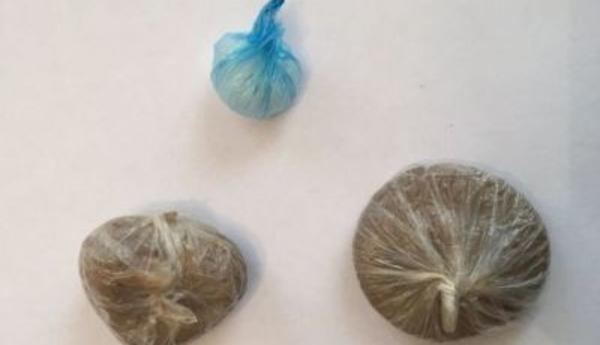
Both Haiti and Dominican Republic became drug transit destinations during the American dominance on the island. The countries were central to the shipment of drugs from Colombia to the U.S. and Europe. Nevertheless, for reasons unknown, reports of the international organizations typically focus on Haiti and not Dominican Republic. Thus, Haiti became a drug transit hub during the U.S. control. That was America’s contribution.
Input of the UN peacekeeping mission
In the wake of the ouster of a democratically elected president, UN peacekeepers were deployed to Haiti in 2004. However, in those years, UN mission also failed to deliver peace and was often implicated in various scandals. First of all, the UN peacekeeping contingent faced accusations of bias. Allegedly, blue helmets had joined forces with the government troops amid the armed raids against the supporters of the previous president. Another incident in Haiti involved soldiers from Sri Lanka serving with the UN mission. Facts of abuse and sexual exploitation against the children emerged in 2007 that resulted in a simple recall of 114 soldiers.
UN peacekeepers were implicated with more negativity in the devastating earthquake in Haiti in 2010. The quake claimed the lives of some 200.000 people and inflicted damages estimated in billions of dollars. In addition, it also provoked a plague epidemic that took nearly 10.000 more lives. According to the research of independent experts, Nepalese soldiers with the UN peacekeeping mission were likely to be the source of the pandemic. And that was the contribution of the UN mission during nearly 10 years in Haiti.
It only demonstrates that the prospects of bolstering reparation-paid independence of Haiti, once one of the France’s richest colonies and now the most impoverished nation in Americas, still rest with the big powers.
Newtimes.az

Bütün xəbərlər Facebook səhifəmizdə































 USD
USD
 EUR
EUR
 GBP
GBP
 RUB
RUB