


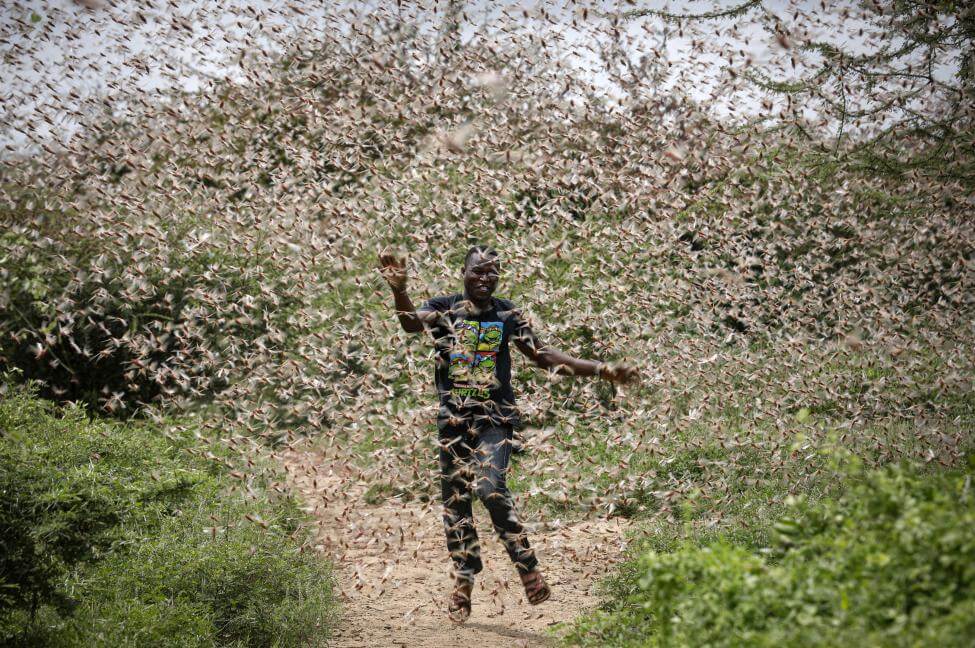
Countries in East Africa are racing against time to prevent new swarms of locusts wreaking havoc with crops and livelihoods after the worst infestation in generations, SIA reports referring to foreign media.
Locust swarms have been recorded in the region since biblical times, but unusual weather patterns exacerbated by climate change have created ideal conditions for insect numbers to surge, scientists say. Warmer seas are creating more rain, wakening dormant eggs, and cyclones that disperse the swarms are getting stronger and more frequent.
In Ethiopia the locusts have reached the fertile Rift Valley farmland and stripped grazing grounds in Kenya and Somalia. Swarms can travel up to 150 km a day and contain between 40-80 million locusts per square kilometre. If left unchecked, the number of locusts in East Africa could explode 400-fold by June. That would devastate harvests in a region with more than 19 million hungry people, the UN Food and Agriculture Organization (FAO) has warned.
Uganda has deployed the military. Kenya has trained hundreds of youth cadets to spray. Lacking pesticides, some security forces in Somalia have shot anti-aircraft guns at swarms darkening the skies. Everyone is racing the rains expected in March: the next generation of larvae is already wriggling from the ground, just as farmers plant their seeds.
The impact so far on agriculture, which generates about a third of East Africa's economic output, is unknown, but FAO is using satellite images to assess the damage, he said.

Bütün xəbərlər Facebook səhifəmizdə



























 USD
USD
 EUR
EUR
 GBP
GBP RUB
RUB