


Russian political scientist: Azerbaijan is giving Armenia a chance to not remain in the blockade - INTERVIEW
Sergei Markov: Azerbaijan is stronger and Armenia will still have to agree with the terms
In Armenia, Prime Minister Nikol Pashinyan continues the consistent "cleansing" of the "Karabakh clan". On July 1, the ruling "Citizen Agreement" faction of the head of the Armenian government, which is the majority in the parliament, voted to remove the opposition leader Ishkhan Sagatelyan from the position of the vice-speaker of the parliament, while retaining his deputy mandate.
"Citizen's Agreement" was diplomatically told that now the opposition can nominate a new candidate for the post of vice-speaker within three days, but it was not mentioned that they could well block the nominated candidate.
After that, Ishkhan Sagatelyan himself said that the opposition will not nominate any new candidate for the position of vice-speaker and announced that the opposition MPs have given up their duties and mandates in the parliament.
In an interview with the Moscow-Baku portal, Sergei Markov, the influential Russian political scientist and director of the Institute of Political Studies, commented on the events taking place in Armenia and the region.
We present the interview to our readers:
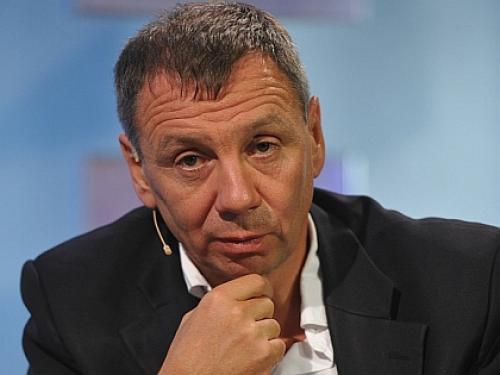
-Sergei Alexandrovich, we remember how Pashinyan managed to make his man the president of Armenia in the spring. It turns out that what is happening now in the parliament is the loss of the opposition - the "Karabakh clan".
- Of course, what happened can be called Pashinyan's next victory. He quietly crushes the opposition from time to time. He has a very balanced strategy, I would say a very competent and accurate work. Obviously, political technologists are working with him. But apart from that, there are the main reasons that allow Pashinyan to succeed in the fight against the opposition.
First: Pashinyan was able to establish his real power during the years he was in power - he is not a nominal head of state, but subjugated all the structures to him and successively purged the representatives of the former power from there. Second, he has the support of the majority of the population, who today see no alternative besides him. The population does not support the opposition, because they understand that if a vengeful party comes to power, a new war will start. They don't want their children to die.
People understand that Armenia will suffer a new defeat. In addition, the people are fed up with the "Karabakh clan", Robert Kocharyan and Serzh Sargsyan, who have been in power for almost 20 years. In principle, they cannot boast of any achievements during the years of power, they have nothing to give except the idea of nationalism, which has put the country and the population in a desperate situation and tied it to regional cooperation. They definitely could not improve the life of the population. Under these conditions, the Armenian society today considers it more optimal to either support Pashinyan or take a neutral position. These are the main reasons that allow the prime minister of Armenia to formalize his political superiority.
Some time ago, Pashinyan was able to appoint his own president as a continuation of the cleansing of the "Karabakh clan". In other words, he purged the clan, revanchists, and representatives of the former government everywhere, thereby strengthening himself. It is very important that he appoints his own people to the special services and the Ministry of Defense. If you remember, there were periods of dissatisfaction between the power structures - the National Security Service, the Ministry of Defense.
- Let's imagine that all opposition deputies give up their mandates. Then what will happen?
- Apparently, the opposition has set itself such a task. But even if all the opposition MPs give up their mandates, nothing will happen, it will not cause any crisis. And therefore there is no positive result for the opposition. Any early elections will in any case mark the victory of the Pashinyan faction again.
They began to refuse the mandate even before Sagatelyan was removed from his post, it seems that now they have decided to do it en masse as a new tactic. But all these or other attempts of the opposition only show its weakness. He still gets nothing. The population does not see their future with this.
- The opposition traditionally makes claims against various international players. Today, another picket was held at the diplomatic mission of the European Union with the claim that the European Union supports Pashinyan. Considering that he is the head of state, it is quite a strange claim.
- Applying to the most diverse structures, scattering various ideas, proposals - this is a completely normal, typical tactic in conditions where nothing else works, no strategy works. Because of this the opposition forces are forced to try different options. Try it here, try it there. This way, that way. However, there is no reaction from the people they called - international players. Accordingly, the actions of the opposition show its weakness.
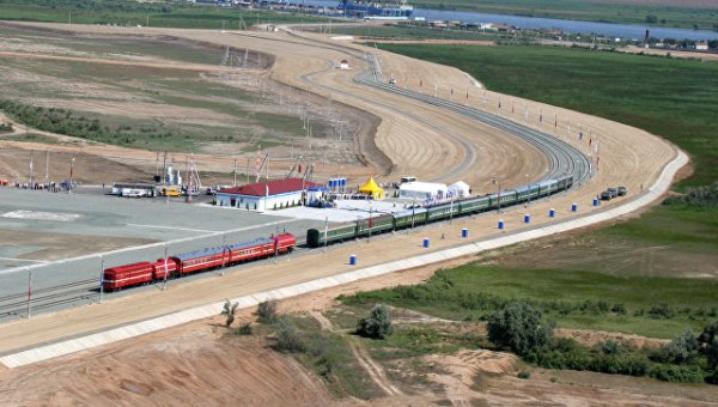
- Today, in the context of new international realities, it is obvious that the topic of building new supply chains is extremely relevant. It seems that Russia has been actively talking about the importance of realizing the North-South transport corridor in recent months, including at the last Caspian summit. And here the topic of Zangezur corridor is added by itself. Apparently, Putin and Aliyev discussed this within the framework of the Ashgabat summit. Finally, both corridors can create such common regional network. The Minister of Foreign Affairs of Azerbaijan stated in Tehran that there is already an agreement with Iran regarding the North-South Corridor.
- I think Putin and Aliyev discussed the Zangezur corridor in Ashgabat. In this matter, as is known, the positions of Baku and Yerevan are different. Azerbaijan insists on the logic of the corridor, Armenia denies it. In general, the cornerstone here is the security of the corridor, the issue of cargo transportation. From the point of view of Azerbaijan and Turkey, security is that the goods and vehicles traveling through the corridor do not depend on Armenia. Iravan insists that there should be Armenian checkpoints in the Zangezur corridor, and the Armenian side will control the inspection of cargo there. Baku says that in this case, the work of the Lachin Corridor will be based on the same analogy, and there will be Azerbaijani checkpoints. Mutual distrust makes it difficult to find a compromise.
Ilham Aliyev said that without the Zangezur Corridor, there will be no normalization between Azerbaijan and Armenia. This formulation of the issue reflects Azerbaijan's priorities. There are 3 main points for Azerbaijan - demilitarization of the part of Karabakh that is not under the control of Baku, delimitation and demarcation of the border, Zangezur corridor. It is quite difficult for Armenia to compromise. But Azerbaijan is stronger and Armenia will still have to agree with their terms.
The Zangezur Corridor is also of great positive importance for Russia, as it will increase rail and road connections with Turkey, one of the important partners of the Russian Federation. In this case, a large amount of cargo will be able to go from Turkey to Russia and back to all of Russia through Azerbaijan and Dagestan. Even from the point of view of ordinary citizens, the opening of such a corridor is positive for Russia, I believe that it will be possible to go to Turkey for vacation by land.
As for the North-South transport corridor, indeed, it seems that it has been agreed that the remaining part of the corridor, which Iran has not completed and whose construction has been discussed for many years, will be completed soon. Both the "North-South" and the Zangezur corridor will indeed become a unified transport network in the region in the future. It is not entirely clear how Russia and Northern Europe will now interact along the corridor, but in any case, India's role here will be renewed.
- A few months ago, Azerbaijan and Iran agreed on the creation of a transport route from the main part of the Republic of Azerbaijan to the part of Nakhchivan through the territory of Iran. What does this mean in terms of the implementation of the Zangezur corridor project, can this transport route be an alternative?
- Especially since the tripartite agreement between the leaders of Russia, Azerbaijan and Armenia is in force, Azerbaijan does not intend to give up the Zangezur corridor. But as for the road between Azerbaijan and its part - the Nakhchivan Autonomous Republic, which passes through the territory of Iran, if this road is built, it will be a real alternative to the Zangezur corridor. In fact, Baku and Moscow offer cooperation to Armenia through the Zangezur Corridor, its removal from the blockade primarily benefits itself. There is a signal in the agreement on the construction of an alternative road between Baku and Tehran - if Armenia continues to insist and does not give full permission to the construction of the Zangezur corridor, then it will simply pass through the territory of Iran. From my point of view, this path can become a completely full-fledged alternative. And if the Zangezur Corridor, the most important highway, is not built through the territory of Armenia, Armenia itself will be blocked again. They will lose again and will be defeated.
By the way, in normalizing relations with Armenia, Turkey is still guided by Yerevan's implementation of agreements on the settlement of Armenia-Azerbaijan.

.jpg)







 USD
USD
 EUR
EUR
 GBP
GBP RUB
RUB
