


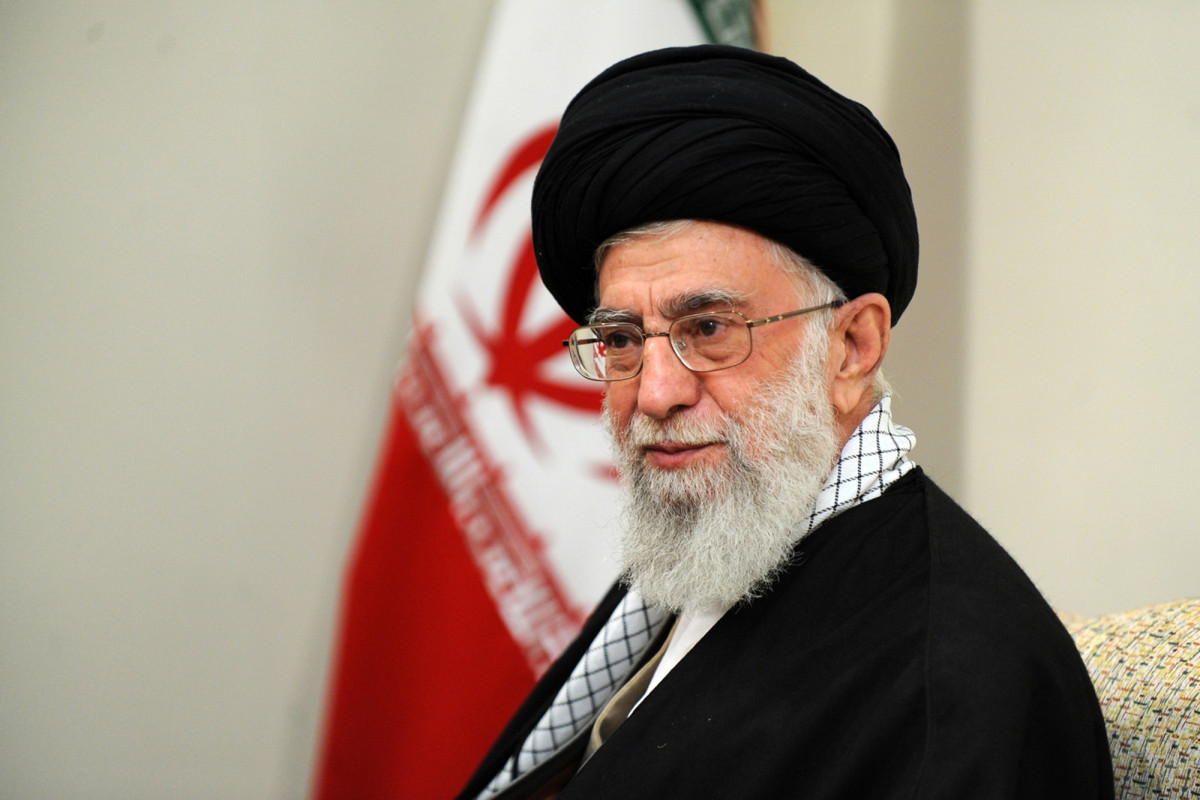
No talk with the US at any level – Iran's supreme leader
"There will be no talks with the US at any level," Iran's Supreme Leader Ayatollah Ali Khamenei said in remarks apparently meant to end all speculation about a US-Iran meeting at the UN later this month.
Iranian state TV on Tuesday quoted Khamenei as saying this is the position of the entire leadership of the country and that "all officials in the Islamic Republic unanimously believe" this.
There has been speculation about a possible meeting between President Donald Trump and his Iranian counterpart, Hassan Rouhani, during the upcoming UN General Assembly this month in New York.
US singles out Iran, readies response to Saudi oil attacks
The US readied its response on Monday to the "unprecedented" attack on Saudi oil facilities as Trump said Iran was likely to blame, fanning new fears of conflict in the Gulf region.
Trump said he was ready to help key ally Saudi Arabia after the weekend drone attacks, which triggered a record leap in global oil prices, but would await a "definitive" determination on who was responsible.
"We have a lot of options," the US leader told reporters, saying there was no rush to react and that talks with allies would come first.
"I'm not looking to get into new conflict, but sometimes you have to," he said.
Iran seizes new boat near vital oil shipping lane
Iran seized a boat suspected of being used to smuggle fuel and arrested its 11 crew members near a vital oil shipping lane, state TV reported on Monday.
A naval patrol of the Islamic Revolutionary Guard Corps intercepted the vessel carrying 250,000 litres of fuel near the Strait of Hormuz, state TV's website said, citing a commander of the force.
"This boat was sailing from Bandar Lengeh towards United Arab Emirates waters before it was seized 32 kilometres east of Greater Tunb island," Brigadier General Ali Ozmayi was quoted as saying.
Kremlin warns against 'hasty conclusions'
Russia urges countries in the Middle East and outside the region not to draw 'hasty conclusions' on who attacked Saudi oil facilities, Kremlin spokesman Dmitry Peskov told reporters.
Peskov also said Russian President Vladimir Putin had not offered to help Saudi Arabia deal with consequences of the attacks, which did not affect preparations for Putin's upcoming visit to the country.
Britain says attack is 'outrageous' but not clear who did it
Britain said an attack on Saudi Arabia's oil facilities was serious and outrageous but that the full facts were needed on who was responsible before making a response.
The attack "was a wanton violation of international law," British Foreign Secretary Dominic Raab said, adding that the UK stood firmly behind Saudi Arabia.
"In terms of who is responsible, the picture is not entirely clear," Raab said. "I want to have a very clear picture which we will be having shortly.
China can't apportion blame for attack without facts
China's Foreign Ministry said it was irresponsible to blame anyone for the attack on Saudi Arabia's oil facilities without conclusive facts.
Ministry spokeswoman Hua Chunying, speaking at a daily news briefing in Beijing, added that China hoped all parties would exercise self-restraint.
Trump not to meet Iran officials with 'no conditions'
Trump on Sunday appeared to play down the chances that he might be willing to meet with Iranian officials, saying reports that he would do so without conditions were not accurate.
"The Fake News is saying that I am willing to meet with Iran, 'No Conditions.' That is an incorrect statement (as usual!)," Trump said on Twitter.
In fact, as recently as on September 10, US Secretary of State Mike Pompeo said, "He [Trump] is prepared to meet with no preconditions."
Energy prices spike after attacks
Global energy prices spiked after the Houthi-claimed drone attack caused the worst disruption to world supplies on record.
Benchmark Brent crude gained nearly 20 percent in the first moments of trading on Monday before settling down to over eight percent higher as trading continued. A barrel of Brent traded up $5.33 to $65.55.
That spike represented the biggest percentage value jump in Brent crude since the lead up to the 1991 Gulf War that saw a US-led coalition expel Iraqi leader Saddam Hussein's forces from Kuwait.
Houthis warn of more attacks
Yemen's Houthi rebels warned of more attacks on Saudi oil facilities and urged foreign companies doing business in the kingdom to stay away from its energy sites.
Yahia Sarie, a rebel spokesman, said facilities such as the Abqaiq oil processing plant and the oil field hit this weekend could again "be targeted at any time."

Bütün xəbərlər Facebook səhifəmizdə
.jpg)
.jpg)







 USD
USD
 EUR
EUR
 GBP
GBP RUB
RUB