

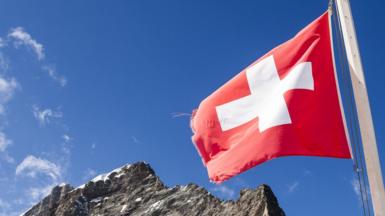
Switzerland, Sweden and Finland are just some of the European states that currently maintain a neutral status. But Russia's attack on Ukraine has forced them to reconsider their stance.
When Russia invaded its neighbour in February, thousands of Swiss citizens took to the streets, condemning the aggression and demanding support for Ukraine. Thousands also offered their homes to Ukrainian refugees, for whom the Swiss government has offered visa-free collective protection.
For young Swiss in particular, the idea that their country could stay aloof in such a conflict seemed unthinkable.
Operation Libero is a young, non-aligned political movement which campaigns for closer ties with Europe - Switzerland is not a member of the EU - and a less isolationist strategy. Its president, Sanija Ameti, believes this new war has been a wake-up call.
"Swiss people are realising that they are part of this European family of liberal democracies. This is a fight between systems, the one that we are in, and the autocratic, kleptocratic system of [Russian President] Putin."
That's a view shared by most political parties and most members of the Swiss government, which moved after a brief hesitation to adopt all the EU's sanctions against Russia. It's a big change from just 40 years ago, when - to the enduring shame of many Swiss - Switzerland did not join sanctions against apartheid South Africa
The adoption of sanctions was greeted with headlines around the world, suggesting that Switzerland had abandoned neutrality. In fact, when it comes to sanctions, neutrality has been fraying round the edges for some time, says Stefanie Walter, politics professor at Zurich University..
Bütün xəbərlər Facebook səhifəmizdə
.jpg)

 USD
USD
 EUR
EUR GBP
GBP RUB
RUB