


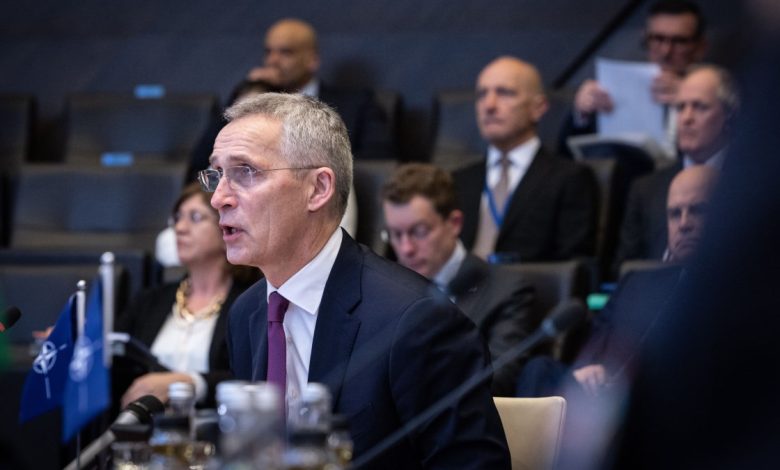
Jens Stoltenberg, the secretary general of the NATO alliance, lashed out on Wednesday against China, accusing the country of spreading the Kremlin's wartime narrative, shoring up Russia's heavily-sanctioned economy and attempting to bend the rules-based world order.
"China refuses to condemn Russia's aggression, echoes Russia's propaganda and props up Russia's economy," Stoltenberg said at the end of a meeting of NATO foreign affairs ministers, SIA refers to foreign media.
Once again, the secretary general pointedly cautioned Beijing against delivering ammunition to Moscow, a scenario that Western officials believe would constitute a game-changer in the Ukraine war.
Beijing has strenuously denied the allegations but the ever-closer links between China and Russia, as showcased last month in a cordial face-to-face meeting between President Xi Jinping and President Vladimir Putin, have put the alliance on edge.
"Any provision of lethal aid would be a historic mistake with profound implications," Stoltenberg said.
"So far we have not been able to confirm any provision of lethal aid but this is something that we follow very closely."
Stoltenberg repeatedly used the expression "severe consequences" to describe the potential retaliation that NATO might take against Beijing in case lethal aid is sent to Moscow but refused to explain what these consequences would mean in practice.
"There's no reason to go into details but China knows that there will be severe consequences," Stoltenberg said.
The secretary-general openly criticised China for its "assertive behaviour" in the South China Sea, its crackdown on Hong Kong's democratic movement, its state apparatus of mass surveillance, its disruptive actions in cyberspace and its continued threatening rhetoric against Taiwan.
He also raised concerns about China's investment in long-range nuclear missiles and its participation in joint patrols alongside Russian forces.
But, Stoltenberg noted, in spite of the growing tensions and plethora of friction points, NATO still does not regard the country as an "adversary."
Bütün xəbərlər Facebook səhifəmizdə










 USD
USD
 EUR
EUR
 GBP
GBP
 RUB
RUB