


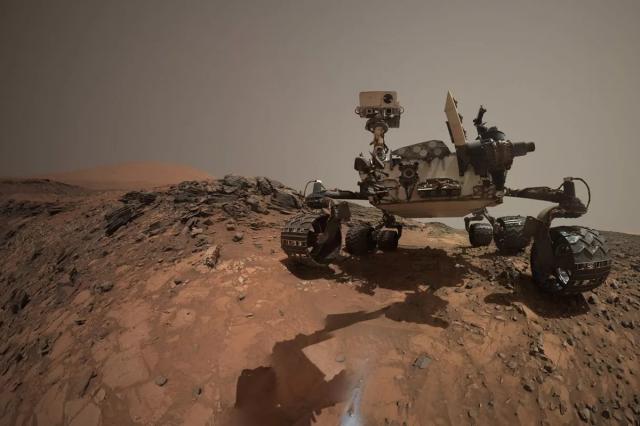
After nearly five years exploring Mars’ Jezero Crater, NASA’s Perseverance rover has been certified to keep operating well into the next decade, thanks to strong performance from its hardware and advanced autonomous systems.
Built and operated by NASA’s Jet Propulsion Laboratory (JPL) in Southern California, Perseverance has driven almost 25 miles across the Martian surface, Space Daily writes.
Engineers say its wheels, steering motors and other key systems are in excellent condition. Tests using spare hardware on Earth show the rover’s mobility system should reliably support at least another 37 miles of driving, with further checks ongoing.
Over the past two years, engineers have reviewed nearly every major subsystem and concluded the rover could remain operational through at least 2031.
“These tests show the rover is in excellent shape,” said Steve Lee, Perseverance’s deputy project manager at JPL, speaking at the American Geophysical Union’s annual meeting.
Perseverance is exploring Jezero Crater, a region once shaped by rivers and a lake, chosen for its potential to preserve signs of ancient life. The rover is drilling and storing rock cores that could one day be returned to Earth. In September, scientists reported that a core taken from a rock called “Cheyava Falls” contains possible chemical signs of past microbial life, highlighting the mission’s scientific importance.
One key reason for Perseverance’s success is its ability to drive largely on its own. The rover carries six main science instruments and the most advanced autonomous navigation system ever used on Mars. Known as Enhanced Autonomous Navigation, or ENav, the system scans terrain up to 50 feet ahead, chooses safe routes and steers around rocks, slopes and sand without waiting for instructions from Earth.
“More than 90% of Perseverance’s journey has relied on autonomous driving, making it possible to quickly collect a diverse range of samples,” said JPL researcher Hiro Ono, lead author of a recent study describing the system. The technology has enabled record-breaking drives, including a 1,350-foot journey in a single Martian day in June 2025.
New scientific findings published in Science focus on an area called the “Margin Unit,” a band of ancient rock along the inner edge of Jezero Crater. There, Perseverance collected three rock cores rich in olivine, a mineral that forms deep inside planets at high temperatures.
Scientists believe these rocks began as magma that cooled underground before later being exposed at the surface. Once exposed, they interacted with water and a carbon dioxide-rich atmosphere, forming carbonate minerals that can preserve clues about past life and changes in Mars’ atmosphere.
“This combination of olivine and carbonate was a major factor in the choice to land at Jezero Crater,” said Ken Williford of the Blue Marble Space Institute of Science, lead author of the study. He noted that these minerals are valuable records of how Mars evolved and whether it was once habitable.
As Perseverance continues toward a region known as Lac de Charmes, scientists hope to collect more olivine-rich samples.

Bütün xəbərlər Facebook səhifəmizdə
.jpg)









.jpg)












.jpg)

 USD
USD
 EUR
EUR
 GBP
GBP
 RUB
RUB