


Over the last few years, the impact of information and communication technologies on society has been enormous. ICT has deeply affected and reshaped most parts of our society, while radically influencing the global economy. No one can predict with certainty what role it will play in the future, but we do know that it will be significant.
One aspect of the growth of ICT in 2014 has undoubtedly been its entry into the "mobile era." It is a tool that constitutes a new infrastructure, changing the way our societies function, while its technical applications give us totally new opportunities to develop new and better solutions to our existing problems.
As the latest International Telecommunication Union publication "2014 Measuring the Information Society Report" notes, the world witnessed continued growth in ICT last year and, by end-2014, almost 3 billion people had used the Internet, up from 2.7 billion at end-2013. While the growth in mobile-cellular subscriptions is slowing as the market reaches saturation levels, mobile broadband remains the fastest-growing market segment, with continuous double-digit growth rates in 2014 and an estimated global penetration rate of 32 per cent.
International bandwidth has also grown steeply, at 45 per cent annually from 2001 and 2013, and developing countries' share of total international bandwidth increased from around 9 per cent in 2004 to almost 30 per cent.
The growth in Internet users ― including via smartphones and smart pads ― has witnessed a parallel, steep growth in the volume of Internet content. More and more people are actively participating in the information society by creating, sharing and uploading content and using social media and other Internet-based applications, covering a large range of topics and sectors.
Going ahead, this year we are likely to see a consolidation of the gains that have already been made, and there will progress on many other technologies that are now on the periphery.
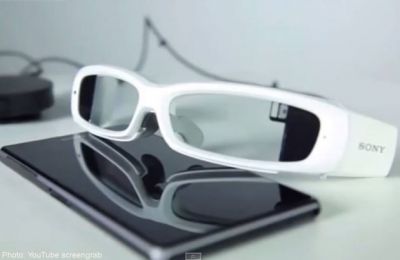
Some of the technologies that have been forecast to make a big impact among consumers in 2015 include, among others, mobile cloud computing, the Internet of Things, 3-D printing, wearables and smart machines.
As noted by International Data Corporation, in 2015 the industry is going to accelerate its transition to the "Third Platform" for innovation and growth, built on the technology pillars of mobile computing, cloud services, big data and analytics, and social networking.
"In 2015, the Third Platform will account for one-third of global ICT spending and 100 per cent of spending growth. The industry is now entering the most critical period yet in this era: the 'Innovation Stage,'" it said in a recent report.
Of this, MCC is expected to be a hotbed of activity and will grow briskly. The combination of cloud computing, mobile computing and wireless networks will bring rich computational resources to mobile users and network operators, as well as cloud computing providers.
The ultimate goal of MCC is to enable the execution of rich mobile applications on a plethora of mobile devices, with a rich user experience. And as smartphones and other mobile devices continue to grow in market share, despite the sudden dip witnessed in recent months, there is likely to be more focus on serving the diverse needs of the mobile customer. Especially when it comes to making their data available whenever and wherever they are. There will be a rise in the delivery of on-demand computing resources and with wireless data set to emerge as the largest and fastest-growing segment, one can expect the cloud services to grow in parallel.
Next is the new buzzword, the Internet of Things ― all-encompassing, cutting across existing product categories and industries ― which is supposed to provide an impetus to the so-called "third platform" era.
- See more at: http://digital.asiaone.com/digital/news/ict-evolving-consumers-2015şthash.bj1GBoH3.dpufOver the last few years, the impact of information and communication technologies on society has been enormous. ICT has deeply affected and reshaped most parts of our society, while radically influencing the global economy. No one can predict with certainty what role it will play in the future, but we do know that it will be significant.
One aspect of the growth of ICT in 2014 has undoubtedly been its entry into the "mobile era." It is a tool that constitutes a new infrastructure, changing the way our societies function, while its technical applications give us totally new opportunities to develop new and better solutions to our existing problems.
As the latest International Telecommunication Union publication "2014 Measuring the Information Society Report" notes, the world witnessed continued growth in ICT last year and, by end-2014, almost 3 billion people had used the Internet, up from 2.7 billion at end-2013. While the growth in mobile-cellular subscriptions is slowing as the market reaches saturation levels, mobile broadband remains the fastest-growing market segment, with continuous double-digit growth rates in 2014 and an estimated global penetration rate of 32 per cent.
International bandwidth has also grown steeply, at 45 per cent annually from 2001 and 2013, and developing countries' share of total international bandwidth increased from around 9 per cent in 2004 to almost 30 per cent.
The growth in Internet users ― including via smartphones and smart pads ― has witnessed a parallel, steep growth in the volume of Internet content. More and more people are actively participating in the information society by creating, sharing and uploading content and using social media and other Internet-based applications, covering a large range of topics and sectors.
Going ahead, this year we are likely to see a consolidation of the gains that have already been made, and there will progress on many other technologies that are now on the periphery.
Some of the technologies that have been forecast to make a big impact among consumers in 2015 include, among others, mobile cloud computing, the Internet of Things, 3-D printing, wearables and smart machines.
As noted by International Data Corporation, in 2015 the industry is going to accelerate its transition to the "Third Platform" for innovation and growth, built on the technology pillars of mobile computing, cloud services, big data and analytics, and social networking.
"In 2015, the Third Platform will account for one-third of global ICT spending and 100 per cent of spending growth. The industry is now entering the most critical period yet in this era: the 'Innovation Stage,'" it said in a recent report.
Of this, MCC is expected to be a hotbed of activity and will grow briskly. The combination of cloud computing, mobile computing and wireless networks will bring rich computational resources to mobile users and network operators, as well as cloud computing providers.
The ultimate goal of MCC is to enable the execution of rich mobile applications on a plethora of mobile devices, with a rich user experience. And as smartphones and other mobile devices continue to grow in market share, despite the sudden dip witnessed in recent months, there is likely to be more focus on serving the diverse needs of the mobile customer. Especially when it comes to making their data available whenever and wherever they are. There will be a rise in the delivery of on-demand computing resources and with wireless data set to emerge as the largest and fastest-growing segment, one can expect the cloud services to grow in parallel.
Next is the new buzzword, the Internet of Things ― all-encompassing, cutting across existing product categories and industries ― which is supposed to provide an impetus to the so-called "third platform" era.
Bütün xəbərlər Facebook səhifəmizdə






























 USD
USD
 EUR
EUR
 GBP
GBP
 RUB
RUB