


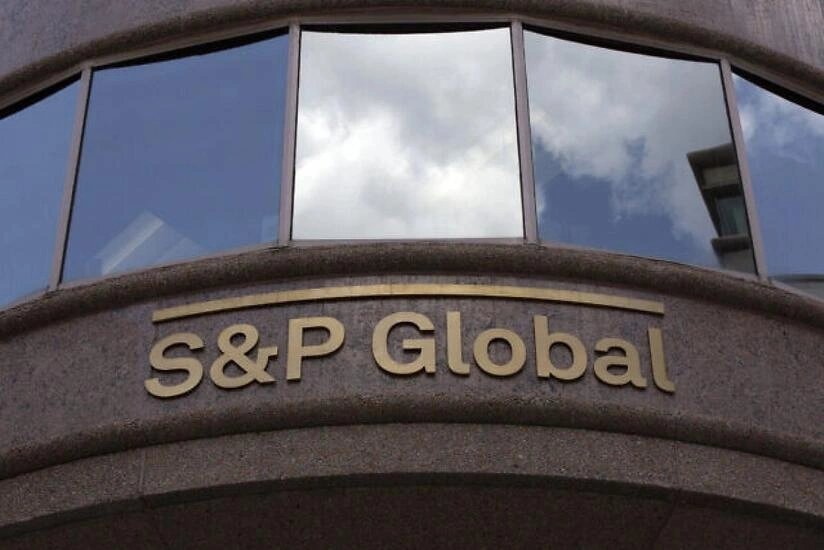
The international credit rating agency S&P Global Ratings expects that banks in Azerbaijan, Armenia, Georgia, Kazakhstan, Kyrgyzstan, and Uzbekistan will maintain resilience in 2026 at levels similar to the previous two years.
According to SİA, which refers to S&P Global Ratings, banks' profitability and capital indicators are expected to be moderate but will continue to be supported by high average credit growth in the region-around 15–20%-and stable asset quality.
The agency notes that in recent years regulatory oversight has significantly strengthened in Kazakhstan and Azerbaijan. Kazakhstan has already implemented Basel III standards and risk-based supervision, while Azerbaijan is in the process of implementing them.
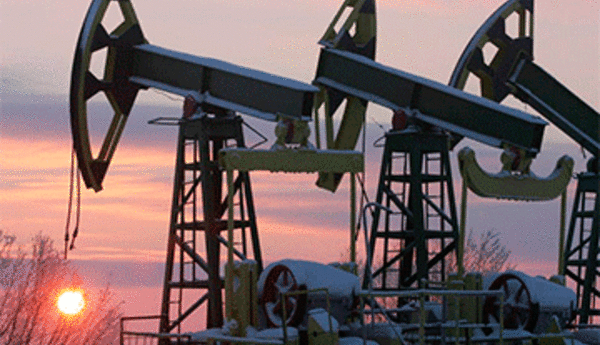
Analysts of the agency believe that Azerbaijan's economic growth rates largely reflect a decline in hydrocarbon revenues: falling oil production and stagnation in gas output outweigh moderate growth in the non-oil sector.
S&P reminds that the Central Bank of Azerbaijan, as the banking sector regulator, developed a Financial Sector Development Strategy for 2024–2026.
"Under Azerbaijan's Financial Sector Development Strategy for 2024-2026, the regulator is transitioning to risk-based supervision and IFRS9. It will also revise the capital adequacy framework to align with Basel III requirements, strengthen requirements for banks' stress testing, implement a new regulatory framework for market risk, and continue developing the resolution framework in 2026," the agency said.
S&P notes that in 2025 the agency revised Azerbaijan's BICRA sector risk outlook from "stable" to "positive." Analysts attribute this to the strengthening of banking regulation and supervision in the country.
The agency also stresses that historically, credit growth in Azerbaijan has been highly correlated with oil prices.
According to S&P"s forecast, credit growth in the country in 2026 will be around 12%, similar to 2025. This is due to the lowest economic growth rates in the region compared to peer countries and expectations of falling oil prices. "Private sector leverage in Azerbaijan remains the lowest among peers, with household debt to GDP of 15% and corporate debt to GDP of 11%," the agency said.
S&P believes that geopolitical risks remain among the most significant for the region. Resolution of the conflict between Russia and Ukraine remains uncertain and will continue to affect the economies of regional countries.
At the same time, the agency emphasizes that regional economies continue to benefit from increased trade flows, capital movement, and migration, as has been the case over the past three years.
The agency notes that maintaining a balance in political relations with both the West and Russia will remain a complex task amid macroeconomic uncertainty in Russia, which is the main trading partner for countries in Central Asia and the Caucasus. "For Armenia, uncertainty persists regarding the conclusion and implementation of a comprehensive peace treaty with Azerbaijan," the agency said.

Bütün xəbərlər Facebook səhifəmizdə

.png)



.png)










 USD
USD
 EUR
EUR
 GBP
GBP RUB
RUB